Quick Answer
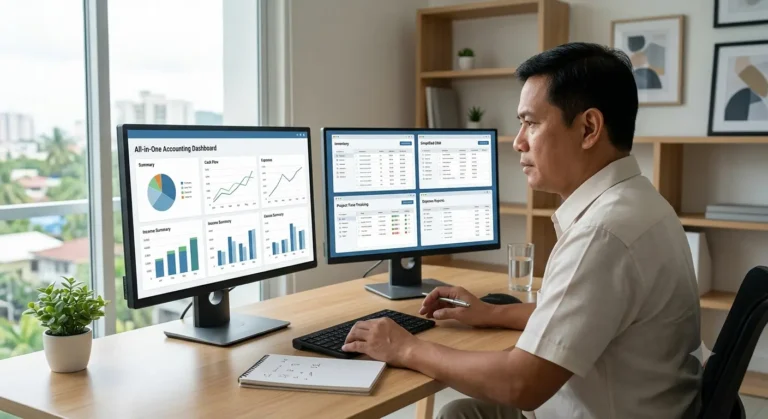
The best accounting software features for small businesses include invoicing, expense tracking, job costing, payment tracking, reporting, mobile access, and integration with scheduling or CRM tools. These features help business owners reduce manual work, manage cash flow, track job profitability, and understand where money is coming from and going.
Accounting Software Features Checklist for Small Businesses
| Feature | What It Helps With | Why It Matters |
|---|---|---|
| Invoicing | Creating and sending bills to clients | Helps improve cash flow and reduce delayed billing |
| Expense Tracking | Recording fuel, materials, labor, and business costs | Helps prevent profit leaks |
| Job Costing | Tracking costs by project or service job | Shows which jobs make money and which ones lose margin |
| Payment Tracking | Monitoring paid, unpaid, and overdue invoices | Helps owners follow up faster |
| Reports | Reviewing revenue, expenses, cash flow, and job profit | Supports better financial decisions |
| Mobile Access | Managing invoices and receipts from the field | Keeps accounting tasks from piling up |
Key Accounting Features Small Businesses Should Prioritize
Invoices
Invoicing should be fast, clear, and connected to the work completed. Small businesses need accounting software that helps create invoices, track unpaid balances, and send payment reminders without rebuilding the same details manually.
Job Costs
Job costing helps business owners see how much each project or service call costs. This includes labor, materials, travel, subcontractors, and other expenses tied to the work. Without job costing, it becomes harder to know which jobs are profitable.
Payments
Payment tracking helps small businesses see what has been paid, what is overdue, and what still needs follow-up. This gives owners a clearer view of cash flow and reduces the chance of missed collections.
Reports
Financial reports should be simple enough to use without needing to dig through complicated dashboards. The best reports show revenue, expenses, unpaid invoices, job profit, and cash flow in a way business owners can act on quickly.
Need Accounting Tools Built for Small Business Workflows?
MBP Accounting helps small businesses manage invoices, expenses, job costs, payments, and reports from one connected platform.
Explore MBP AccountingWhat Should Small Businesses Look for in Accounting Software?
Small businesses should look for accounting software that includes cloud access, automated invoicing, expense tracking, bank integration, and customizable reporting. The best tools reduce manual data entry, improve cash flow visibility, and scale as the business grows. For contractors and tradesmen specifically, features like job costing, mobile access, and progress billing are essential, not just general bookkeeping functions.
Selecting the right accounting software is a critical decision for small businesses. It goes beyond simply recording income and expenses, the right solution can streamline operations, provide valuable financial insights, and support better decision-making. For small business owners and contractors in particular, having reliable, user-friendly accounting tools in place can make day-to-day financial management more efficient and accurate.
Quick Answer
Why Disconnected Accounting Software Hurts Contractors
Contractors struggle with disconnected accounting software because financial data, scheduling, job tracking, and customer information live in separate systems. This creates duplicate data entry, reporting gaps, and delays between office and field operations. Integrated platforms reduce manual work and give contractors a clearer view of cash flow, jobs, and business performance in one place.
Which Accounting Software Is Best for Small Businesses?
These three platforms are among the most commonly evaluated by small business owners. Each serves a different business profile, and choosing the wrong one creates the exact inefficiencies this article aims to solve. For businesses that need accounting alongside scheduling, job management, and CRM in one place, MyBusinessPortal.cloud offers an alternative worth evaluating before committing to a standalone accounting tool.
QuickBooks Online
QuickBooks is the most feature-complete standalone accounting option for small businesses that need robust reporting, payroll integration, and accountant collaboration. It supports job costing, class tracking, and a wide library of third-party integrations. It is the preferred platform of most bookkeepers and CPAs, which simplifies tax preparation and financial review. The tradeoff is cost. QuickBooks Online plans range from $30 to $200 per month and have a steeper learning curve compared to simpler alternatives. Businesses that outgrow QuickBooks often find they still need separate tools for scheduling, CRM, and job management, which adds cost and creates data silos.
Best for: Businesses with dedicated bookkeeping support, complex reporting needs, or plans to scale significantly.
FreshBooks
FreshBooks is built around invoicing and client billing, making it a strong fit for service-based businesses, freelancers, and contractors who bill by project or hourly rate. Its interface is notably easier to learn than QuickBooks, and its mobile app is among the most capable in the category. It lacks depth in areas like inventory management and payroll but excels at time tracking, retainer billing, and client communication. Like QuickBooks, FreshBooks is a single-function tool. Businesses that also need crew scheduling, work order management, or a client portal will need to subscribe to additional platforms separately.
Best for: Solo operators, freelancers, and service businesses where invoicing and time tracking are the primary accounting functions.
Wave
Wave is a free accounting platform that covers invoicing, expense tracking, and basic reporting at no monthly cost. It earns revenue through payment processing fees and optional payroll services. For very small businesses or those in early stages, Wave provides genuine accounting functionality without a subscription commitment. Its limitations become apparent as businesses grow. Reporting is less customizable, integrations are more limited, and there is no job costing functionality.
Best for: Sole proprietors, early-stage businesses, or any operation where budget is the primary constraint.
MyBusinessPortal.cloud
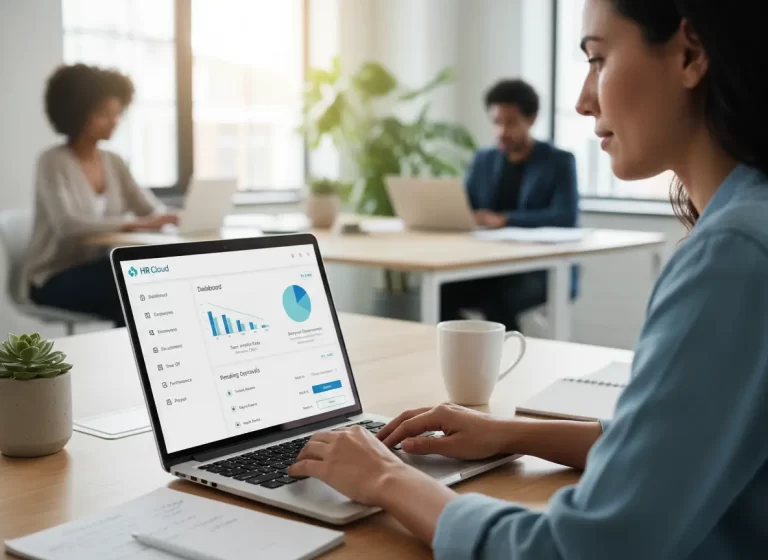
MyBusinessPortal.cloud is built specifically for contractors, tradesmen, and small businesses that need more than accounting in isolation. Where QuickBooks, FreshBooks, and Wave handle financials as a standalone function, MyBusinessPortal.cloud integrates invoicing and expense tracking with scheduling, CRM, HR, and work order management in a single platform. This eliminates the need to subscribe to and synchronize multiple tools, reducing software costs and the manual data entry that comes with disconnected systems. For trade businesses managing crews, job sites, and client billing simultaneously, an integrated platform removes the operational gaps that standalone accounting software leaves behind.
Best for: Contractors, tradesmen, and small businesses that need accounting, scheduling, job management, and CRM to work together without stitching multiple subscriptions together.
| QuickBooks Online | FreshBooks | Wave | MyBusinessPortal.cloud | |
|---|---|---|---|---|
| Monthly cost | $30 to $200 | $19 to $60 | Free | Contact for pricing |
| Best for | Full bookkeeping | Invoicing and billing | Budget-conscious | Contractors and tradesmen |
| Job costing | Yes | Limited | No | Yes |
| Scheduling | No | No | No | Yes |
| CRM | No | No | No | Yes |
| Work order management | No | No | No | Yes |
| Mobile app | Strong | Excellent | Moderate | Yes |
| Accountant-friendly | Yes | Moderate | Limited | Yes |
1. Cloud-Based Access
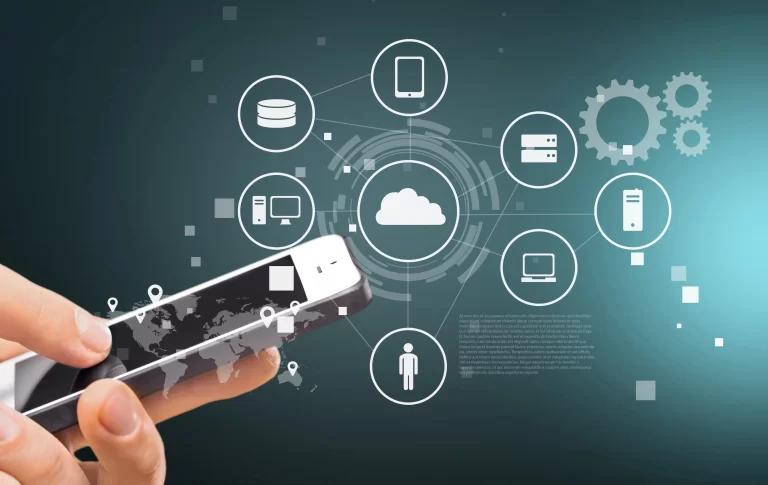
In today’s mobile world, your accounting software needs to be where you are. Whether you’re meeting a client on-site or checking in from your truck, Cloud-Based Access gives you the flexibility to log in, check balances, send an invoice, or categorize expenses in real time. No more being tethered to a desk or scrambling for paper receipts.
A good cloud-based accounting solution will offer robust security, multi-user access, and real-time data syncing. That’s productivity, safety, and convenience all in one.
2. Invoicing
If your software doesn’t help you send professional, customizable invoices in minutes, it’s not worth your time. For contractors and small businesses, invoicing is the heartbeat of cash flow. Look for accounting platforms that double as invoice software for contractors, enabling you to add labor, materials, custom taxes, and even project-based billing.
Want recurring invoicing? Automatic reminders? Digital payment links? Yes, yes, and yes.
3. Expense Tracking
This is where your profits either shine or get swallowed up. The best expense tracking software helps you categorize every dollar, monitor budgets, attach receipts, and even flag unusual activity. Make sure your tool allows real-time expense syncing from your bank account or credit card because manual entry is so 2008.
With proper Expense Tracking, you’ll always know what’s deductible, what’s wasteful, and what’s moving your business forward.
4. Integration with Local Banking
Your software should talk to your bank. That’s non-negotiable. Integration with Local Banking ensures that your transactions are imported automatically, reconciliations are quicker, and cash flow snapshots are accurate.
It’s also a time-saver: no more cross-checking statements, typing in figures, or wondering where that charge came from.
5. User-Friendly Interface
Don’t you just love when software makes sense the first time you use it? Accounting systems should work with you, not against you. A User-Friendly Interface makes it easier to train staff, onboard clients, and reduce errors. Dashboards should be intuitive, and reports should be easy to generate.
If you’re spending more time trying to learn the system than using it walk away.
6. Mobile Access
We’re on the go. Business doesn’t stop when you leave the office. With Mobile Access, you can send invoices, capture receipts, check balances, and approve expenses from your phone or tablet.
Whether you’re at a job site or picking up materials, your numbers should always be at your fingertips. This feature is a must-have for contractors and mobile teams.
7. Automation
You know what I adore? Automation! It’s like having a little accountant in your pocket. The best software lets you automate recurring invoices, bill payments, payroll, tax calculations, and even reminders.
Automation eliminates human error and saves precious time which, as we know, means money.
If your current setup requires a ton of manual input, it’s time to upgrade.
8. Customizable Reports
Numbers tell a story but only if you’re looking at the right ones. Look for software that offers Customizable Reports so you can track performance, cash flow, tax liabilities, job profitability, and more.
Tailor your reports to your needs, whether you’re preparing for tax season or presenting to a potential investor. Flexibility here can be a game-changer.
9. Integration with Other Business Tools
Your accounting software shouldn’t operate in a vacuum. The top systems offer Integration with Other Business Tools like CRMs, scheduling platforms, inventory management, payroll providers, and even time-tracking apps.
When everything works together, your business flows better, no duplicate entry, no data silos, just pure harmony.
10. Affordable Pricing
You don’t need to spend a fortune to get powerful tools. Affordable Pricing doesn’t mean sacrificing quality. It means getting real value for what you pay.
Look for tiered plans that scale with your business, so you’re only paying for the features you actually use.
Bonus: Designed for Contractors
If you’re in construction, field services, or any trade, make sure the software was built with you in mind. You want something that supports job costing, progress billing, mileage tracking, and mobile-friendly features.
The best tools function as true contractor invoicing software, not just general accounting programs.
Final Thoughts
The right accounting software is more than just a tool, it’s your financial co-pilot. It helps you grow, avoid pitfalls, and make informed decisions. For small businesses, especially contractors and tradesmen, having a platform that supports the way you work is essential.
If you’re looking for business software that integrates accounting with scheduling, inventory, and real-time mobile tools, check out MyBusinessPortal.cloud. We offer business management solutions specifically tailored for contractors, tradesmen, and small businesses.
Need Accounting Tools Built for Small Business Workflows?
MBP Accounting helps small businesses manage invoices, expenses, job costs, payments, and reports from one connected platform.
Explore MBP AccountingFrequently Asked Questions
What should small businesses look for in accounting software?
Small businesses should look for accounting software that includes cloud access, automated invoicing, expense tracking, bank integration, and customizable reporting. The best systems reduce manual data entry, improve cash flow visibility, and scale as the business grows. For contractors and tradesmen, features like job costing, mobile access, and progress billing are especially important.
Why do many small businesses outgrow their accounting software?
Many businesses outgrow their accounting software because it cannot keep up with operational complexity as the company grows. Reporting becomes harder to manage, invoicing slows down, and financial visibility decreases. The issue is often not the team’s effort, but software that was never designed to scale with the business.
Why is cloud-based accounting software important?
Cloud-based accounting software allows business owners and teams to access financial information from anywhere. Whether at a job site, in the office, or on the road, users can send invoices, check balances, and manage expenses in real time. This flexibility improves efficiency and keeps financial data current across the business.
How does automated invoicing improve cash flow?
Automated invoicing helps businesses send invoices faster, track unpaid balances, and remind clients automatically about overdue payments. Faster invoicing shortens payment delays and improves cash flow consistency. It also reduces administrative work and minimizes billing mistakes.
Why is expense tracking critical for small businesses?
Expense tracking helps businesses understand where money is being spent and identify unnecessary costs. Good accounting software categorizes expenses, syncs with bank accounts, and simplifies tax preparation. Accurate expense tracking also improves profitability analysis and financial planning.