Projects rarely fall behind without warning. Most delays start small. A missed update. A task with no owner. A material delay. A client question that sits unanswered. A schedule conflict nobody sees until it becomes urgent.
Job visibility helps prevent these problems by showing your team what is happening, who is responsible, what is delayed, and what needs attention next.
When everyone works from the same information, projects move faster and with less confusion.
Quick Answer
How does job visibility help teams finish projects faster?
Better job visibility helps teams finish projects faster by showing job status, task ownership, deadlines, schedules, blockers, materials, and next actions in one place. Managers can identify stalled work earlier, while employees can see what needs attention without relying on repeated calls, messages, or manual status checks.
Why Better Job Visibility Helps Teams Finish Faster
Job visibility means your team has a clear view of every active job from start to finish.
This includes:
- Job status
- Assigned team members
- Deadlines
- Client updates
- Materials needed
- Schedule changes
- Work order progress
- Follow-up tasks
- Approval status
- Notes and files
Without visibility, teams rely on memory, text messages, spreadsheets, and scattered updates. That creates confusion. Managers spend more time chasing information. Employees lose time waiting for answers. Clients receive delayed updates.
With better visibility, everyone knows where the job stands.
How Job Visibility Helps Teams Spot Bottlenecks Early
Bottlenecks happen when one part of the job slows everything else down.
Sometimes the delay comes from a missing approval. Sometimes it comes from unavailable materials, unclear instructions, or one person holding a task too long.
Job visibility helps managers spot bottlenecks early.
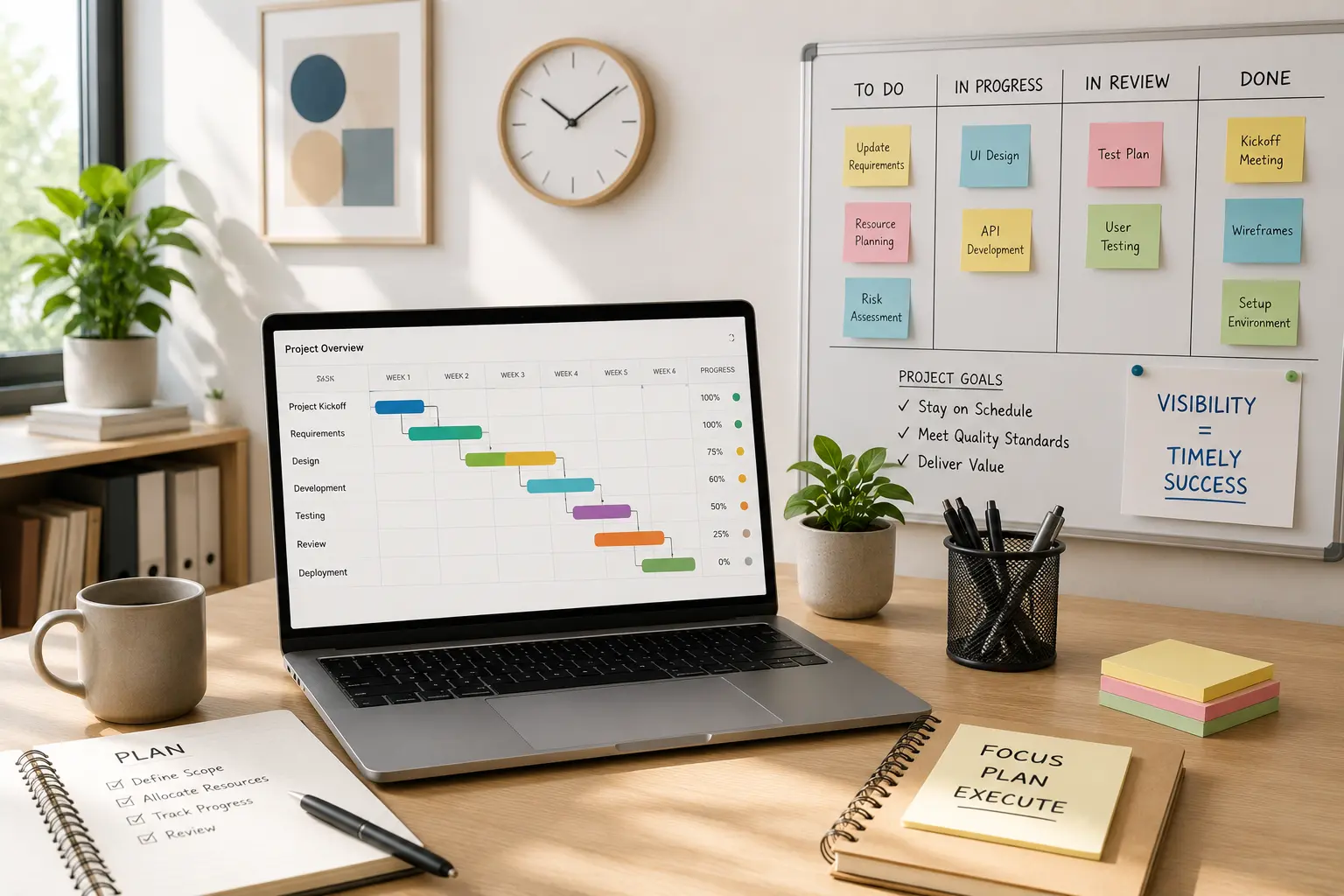
For example, a visual job board can show which tasks are stuck, overdue, or waiting on another person. Instead of finding out at the end of the week, the team can act right away.
This prevents small delays from becoming major project setbacks.
How Clear Job Visibility Improves Time Management
Poor time management often happens when teams do not know what needs attention first.
Job visibility makes priorities easier to see. Team members know which jobs are active, which deadlines are close, and which tasks affect the next step.
This helps teams:
- Plan daily work
- Avoid duplicate effort
- Reduce idle time
- Focus on urgent tasks
- Balance workloads
- Prepare for upcoming deadlines
When your team sees the full job timeline, they can use their time better.
How Job Visibility Keeps Teams, Clients, and Vendors Aligned
Stakeholders include managers, employees, clients, vendors, subcontractors, and office staff. When each group has different information, project delays happen fast.
Job visibility keeps stakeholders aligned by giving everyone access to the latest updates.
This reduces questions like:
- Has this been approved?
- Who is handling this?
- What is the latest client update?
- Is the job ready for the next step?
- Are materials available?
- When is the technician scheduled?
Clear visibility removes guesswork. It also helps clients feel informed because the team can provide accurate updates without digging through messages.
How Clear Task Ownership Prevents Project Delays
Projects slow down when nobody knows who owns the next step.
A task with no owner becomes a task that gets ignored. A task with two owners becomes a task that creates confusion.
Job visibility creates clear ownership by showing who is responsible for each part of the job.
Each task should have:
- One owner
- One due date
- Clear instructions
- A defined outcome
- Status updates
When ownership is clear, accountability improves. Team members know what they need to complete, and managers know who to follow up with when something gets stuck.
How to Improve Job Visibility Across Your Team
Better job visibility does not mean adding more meetings. It means building a system where updates are easy to see and easy to maintain.
The goal is simple. Everyone should know what is happening without asking five people or searching through multiple tools.
Start with these steps.
Use Visual Boards to Track Job Progress
Visual boards help teams see job progress at a glance.
A simple board might include stages such as:
- New request
- Scheduled
- In progress
- Waiting on client
- Waiting on materials
- Ready for review
- Completed
- Invoiced
This layout helps managers spot delays fast. It also gives team members a clear path from start to finish.
Visual boards work well because they turn scattered tasks into a clear workflow.
Centralize Job Details in One System
A connected work management system helps teams keep job updates, task ownership, files, and progress visible. When it connects with team scheduling and customer records, your team gets a clearer view of the full job lifecycle.
Job visibility breaks down when information lives in too many places.
If notes are in emails, schedules are in calendars, files are in folders, and updates are in text messages, nobody has the full picture.
Centralizing information keeps everything connected.
A centralized system should include:
- Customer details
- Job notes
- Work orders
- Schedules
- Internal comments
- Files
- Estimates
- Invoices
- Material requests
- Follow-up reminders
This gives your team one reliable place to check before making decisions.
Define Clear Outcomes Before Work Begins
A job should not only have tasks. It should have clear outcomes.
Clear outcomes help everyone understand what success looks like. They also reduce unnecessary revisions and back-and-forth communication.
For each job, define:
- What needs to be completed
- What the final result should look like
- Who approves the work
- What information must be documented
- What happens after completion
When outcomes are clear, the team works with more focus and fewer assumptions.
Clear Job Visibility vs. Scattered Job Tracking
| Area | Clear Job Visibility | Scattered Job Tracking |
|---|---|---|
| Task ownership | Each task has a clear owner, due date, and status. | Teams guess who is responsible for the next step. |
| Deadlines | Due dates are visible before work falls behind. | Deadlines get buried in messages or spreadsheets. |
| Client updates | Notes and updates stay connected to the job record. | Updates get lost in texts, emails, or separate apps. |
| Bottlenecks | Managers spot stuck tasks, missing approvals, and delays early. | Problems stay hidden until they affect the deadline. |
| Scheduling | Teams see workload, availability, and upcoming jobs clearly. | Jobs overlap, updates lag, and schedules change without visibility. |
| Accountability | Progress is easier to track because responsibilities are documented. | Follow-ups depend on memory and repeated reminders. |
| Project completion | Jobs move through clear stages from request to completion. | Work stalls between steps because the next action is unclear. |
Signs Your Team Needs Better Job Visibility
Your team may need better job visibility if projects keep slowing down even when everyone is busy. The problem is often not effort. The problem is missing information, unclear ownership, and scattered updates.
Signs include:
| Sign | What It Means |
|---|---|
| Managers keep asking for status updates | Job progress is not visible enough. |
| Team members do not know what to prioritize | Tasks and deadlines are unclear. |
| Client updates get lost | Information is scattered across emails, texts, or chats. |
| Jobs sit too long between steps | No one clearly owns the next action. |
| Material delays are noticed late | Blockers are not tracked early enough. |
| Schedule changes confuse the team | Updates are not shared in one central place. |
| Completed work is hard to track | The team lacks a clear job history from assignment to billing. |
How Better Job Visibility Improves Customer Experience
Customers do not only care about the final result. They also care about communication.
When your team has job visibility, customers receive better updates. They know when work is scheduled, what stage the project is in, and what needs to happen next.
This builds trust because the customer does not feel ignored.
Strong job visibility helps your team:
- Respond faster
- Set better expectations
- Reduce missed follow-ups
- Avoid repeated questions
- Keep projects moving
- Deliver a more professional experience
A better internal process creates a better customer experience.
Improve Job Visibility
Give Your Team One Clear View of Every Job
MBP Work Management helps contractors organize tasks, deadlines, schedules, job updates, files, and responsibilities so office and field teams can see what is happening and what needs attention next.
Explore Work Management Schedule a DemoJob Visibility FAQs
What is job visibility?
Job visibility means your team can see job status, task ownership, deadlines, schedules, notes, files, customer updates, and blockers in one place.
How does job visibility help projects finish faster?
Job visibility helps projects finish faster by showing delays, stuck tasks, missing approvals, and schedule conflicts early.
Why do projects fall behind when job visibility is poor?
Projects fall behind when updates are scattered across emails, texts, spreadsheets, and separate tools. Teams miss deadlines, duplicate work, and lose track of the next step.
What tools improve job visibility?
Work management software improves job visibility by keeping tasks, schedules, job updates, files, customer details, and progress tracking in one system.
How does better job visibility improve customer experience?
Better job visibility helps teams give faster updates, set clearer expectations, reduce missed follow-ups, and keep projects moving.