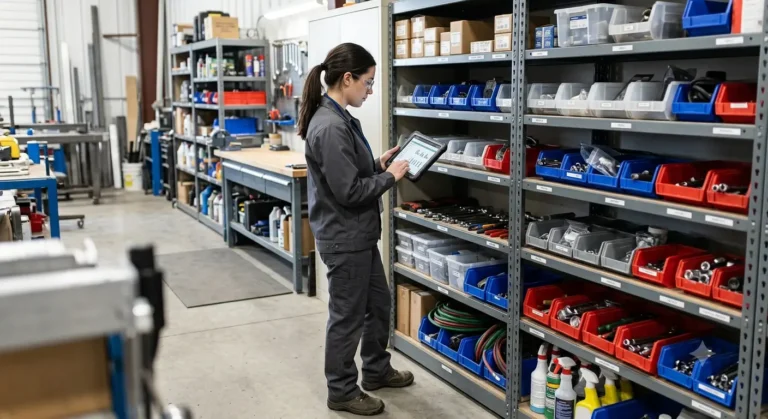


Lost tools and missing materials can slow down a contractor’s entire day. A misplaced drill, missing extension cord, short supply count, or part stored in the wrong truck can turn a simple job into wasted time, emergency purchases, and delayed work.
For contractors, inventory problems are rarely just about “stuff.” They affect schedules, crew productivity, customer updates, job costs, and profit margins.
Contractor inventory management software helps teams track tools, materials, stock levels, job supplies, and restock needs in one place so crews can find what they need before the job slows down.
Quick Answer
What are the biggest inventory challenges for contractors?
The biggest inventory challenges for contractors include lost tools, missing materials, duplicate purchases, emergency supply runs, skipped inventory updates, and poor visibility across trucks, job sites, and storage areas.
Inventory software helps contractors track what they have, where items are located, who used them last, what needs restocking, and which supplies are tied to each job.
| Inventory Challenge | What Happens | Better Fix |
|---|---|---|
| Lost tools | Crews waste time searching | Tool tracking |
| Missing materials | Jobs get delayed | Stock alerts |
| Duplicate purchases | Costs increase | Central inventory list |
| Skipped updates | Records become wrong | Mobile updates |
| Wrong truck or site | Crews arrive unprepared | Location tracking |
| Emergency supply runs | Schedules fall behind | Restock reminders |
1. You Don’t Know What You Actually Have
When inventory is spread out between trucks, job sites, and storage units, it’s easy to lose track of what’s where. Without a centralized list or system, you’re relying on memory or guesswork.
This leads to duplicate purchases, surprise shortages, and lost time hunting down basic items.
Contractors can use inventory software to track tools, materials, stock levels, restock needs, and item locations across trucks, storage areas, and job sites.
When inventory affects active jobs, work management software helps connect supplies, tasks, job notes, and completion updates in one system.
For scheduled work that depends on crews having the right materials, calendar software helps teams coordinate job timing, crew availability, and supply readiness.
2. Tools Disappear Without Accountability
On a busy workday, tools move fast. But when there’s no check-out or tracking system in place, tools get borrowed, left behind, or misplaced and no one knows who had them last.
Without accountability, your team can’t stay organized, and you end up spending more time replacing gear than using it.
How Tool Tracking Reduces Lost Equipment
Tool loss becomes easier to manage when every item has a clear location, user, and status. Contractors do not need a complicated process. They need a simple way to know who used the tool, where it was assigned, and whether it returned after the job.
| Tool Tracking Need | Why It Helps |
|---|---|
| Assigned user | Shows who had it last |
| Job location | Tracks where it was used |
| Return status | Confirms it came back |
| Condition notes | Flags damaged tools |
| Photo record | Helps identify equipment |
| Replacement alert | Prevents repeat delays |
3. Emergency Runs Become Normal
If you’re constantly stopping work to buy parts or tools you thought you had, your inventory system is costing you more than you realize.
These last-minute runs don’t just burn time. They delay your schedule, frustrate your team, and cut into your profit margins.
4. Inventory Updates Get Skipped
Even if you have a spreadsheet or manual system, it’s only as good as the last time someone remembered to update it.
When updates rely on one person or get skipped during busy days, your records go out of date fast and that creates a ripple effect across your schedule, billing, and team planning.
5. You Can’t See Inventory Across Jobs
If your business is juggling multiple jobs, knowing what materials are available at a glance becomes critical. Without that visibility, you risk overstocking one site while understocking another.
This leads to delays, miscommunication, and inefficient use of your resources.
Why Job Site Inventory Visibility Matters
Contractors often manage materials across trucks, storage areas, warehouses, and active job sites. Without real-time visibility, one crew may be short on supplies while another site has extra stock sitting unused.
Job site inventory visibility helps contractors:
- Reduce emergency supply runs
- Avoid duplicate material purchases
- Move supplies between jobs faster
- Prevent crew downtime
- Track job-specific material usage
- Improve job cost accuracy
When inventory is connected to active work, managers can see what is available, what is missing, and what needs to be ordered before the schedule gets disrupted.
Work Smarter With MBP
Stop Losing Time to Missing Tools and Materials
MBP Inventory helps contractors track tools, materials, stock levels, restock needs, and item locations so crews can stay prepared and jobs keep moving.
Schedule a DemoRelated Inventory Resources
- How Inventory Mistakes Delay Projects and Cost Contractors Money
- Simple Inventory Tracking for Small Contractor
- How Service-Based Businesses Use Inventory Forecasting to Avoid Stockouts
- Inventory Templates vs Inventory Software: Which Saves More Time for Contractors?
- How Real-Time Inventory Management Reduces Costs for Small Businesses
Contractor Inventory Challenges FAQs
What are common inventory challenges for contractors?
Common inventory challenges for contractors include lost tools, missing materials, duplicate purchases, skipped updates, inaccurate stock counts, emergency supply runs, and poor visibility across trucks, job sites, and storage areas.
Why do contractors lose tools so often?
Contractors often lose tools because equipment moves between crews, trucks, storage areas, and job sites without a clear check-out system. Without tool accountability, no one knows who used the item last or where it was left.
How does inventory software help contractors?
Inventory software helps contractors track tools, materials, stock levels, item locations, usage history, and restock needs. This gives managers better visibility before missing supplies delay a job.
How can contractors reduce emergency supply runs?
Contractors can reduce emergency supply runs by tracking stock levels, setting restock reminders, assigning supplies to jobs, and updating inventory records from the field.
When should contractors stop using spreadsheets for inventory?
Contractors should stop using spreadsheets when inventory updates get skipped, tools go missing, stock counts are inaccurate, crews make duplicate purchases, or job delays happen because supplies cannot be found.
Final Take
Losing tools or supplies may seem like a small issue, but the time spent searching, replacing, or reordering adds up fast. What feels like minor inconvenience becomes a major drain on productivity and profit.
At MyBusinessPortal.cloud, our inventory tools give you clear visibility into where your items are, what’s in stock, and what needs to be restocked. You can track usage across jobs, avoid surprise shortages, and keep your team moving without the guesswork.