Many small businesses operate in reaction mode. A job gets delayed, then the team scrambles. A customer calls for an update, then someone searches for the details. A worker misses a task, then the manager tries to find out what happened. By the time the problem is visible, time, money, and trust may already be lost.
Smart business software changes that.
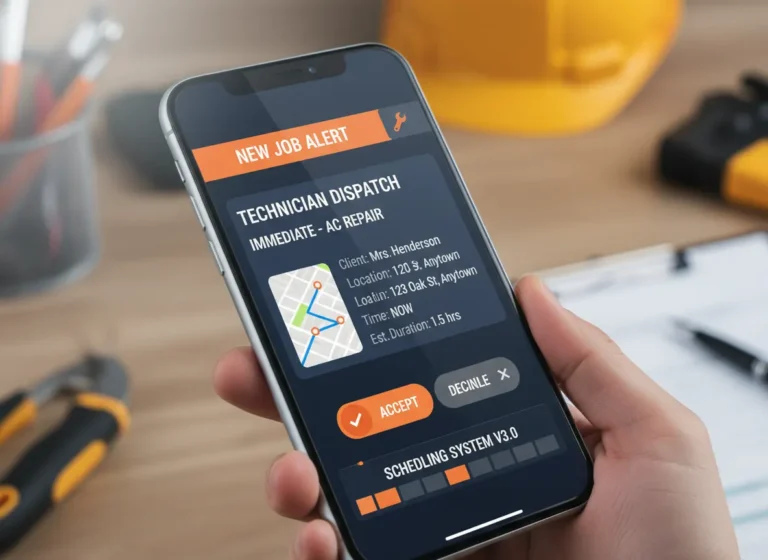
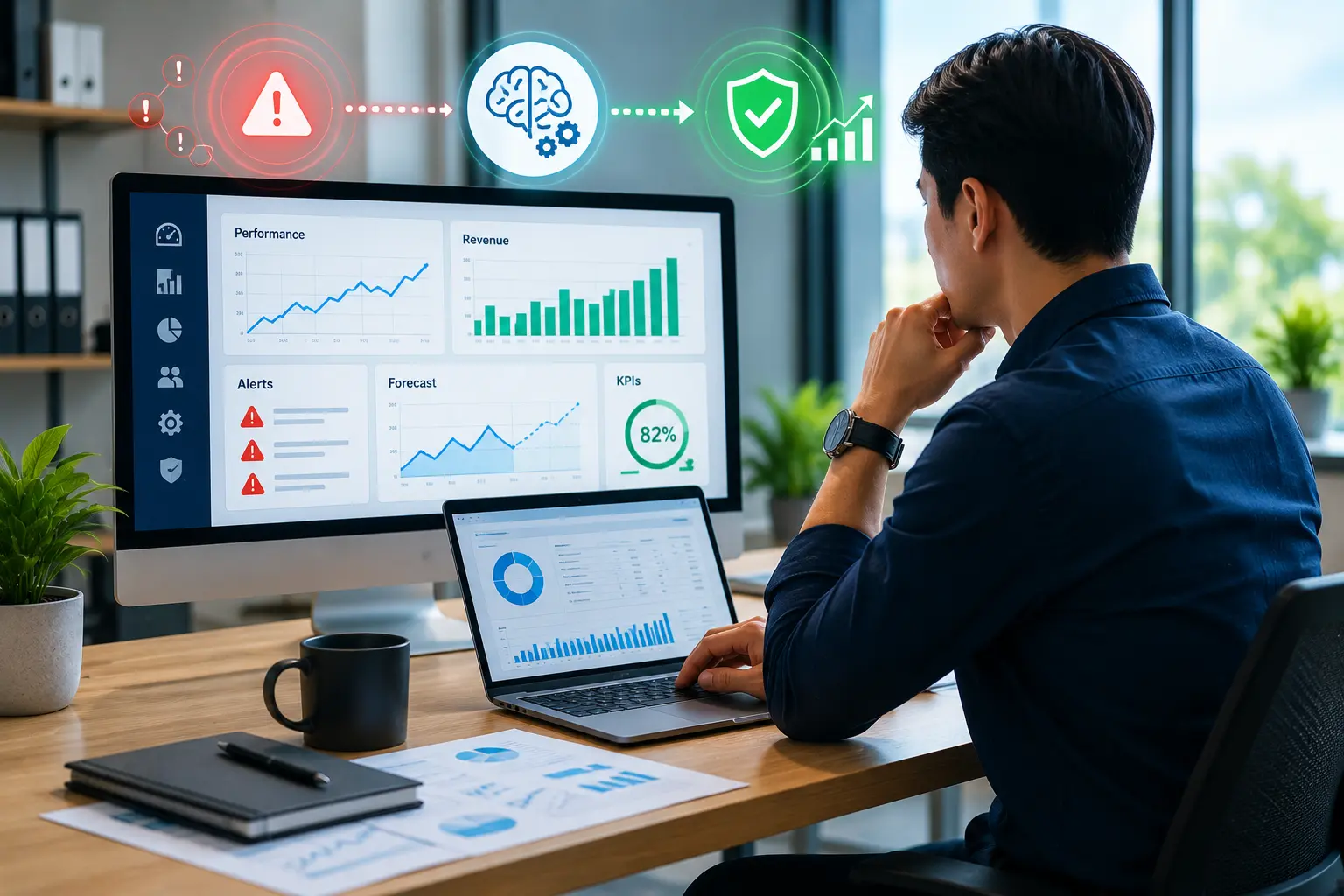
Instead of waiting for problems to happen, businesses can use connected systems, automation, real-time data, and predictive tools to spot risks earlier. This helps teams plan better, reduce manual work, and prevent avoidable issues before they slow down operations.
For contractors, tradesmen, and small business teams, the shift from reactive to predictive work can make daily operations more organized, efficient, and profitable.
Quick Answer
How does smart business software prevent problems before they happen?
Smart business software helps businesses prevent problems before they happen by using real-time data, automation, alerts, and connected workflows to identify risks early.
Instead of reacting after issues occur, teams can improve visibility, make faster decisions, and manage operations more efficiently.
Why Small Businesses Need Predictive Operations
The shift in strategy from reactive to predictive is about changing how a business handles problems.
Reactive businesses respond after something goes wrong. Predictive businesses use information to prevent the issue before it becomes a bigger problem.
A reactive business might only notice a scheduling conflict when a customer calls asking where the team is. A predictive business sees the conflict early because its system tracks schedules, workload, job status, and team availability in one place.
This shift matters because small problems can quickly become expensive. A missed update can delay a job. A delayed job can affect the next appointment. A missed appointment can damage customer trust. When businesses only react, they stay stuck in cleanup mode.
Smart business software gives teams the visibility they need to work ahead instead of chasing problems all day.
Common Problems Smart Business Software Helps Prevent
Small businesses often lose time and money because problems are discovered too late. Without connected systems, teams may struggle with:
- Missed scheduling conflicts
- Delayed customer follow-ups
- Unclear task ownership
- Employee workload issues
- Inventory shortages
- Communication gaps between teams
Smart business software helps identify these issues earlier by connecting important business information in one place.
Reactive vs Predictive Business Software
Moving from reactive to predictive does not mean a business needs complicated technology overnight. It starts with better visibility.
When tasks, schedules, documents, customer updates, inventory, and team activity are spread across different tools, managers cannot easily see what is happening. They only find out about problems when someone reports them.
A predictive system connects important business information so teams can recognize patterns and risks sooner.
Traditional Business Management vs Smart Business Software
| Area | Traditional Approach | Smart Business Software |
|---|---|---|
| Problem Detection | Issues are discovered after they happen | Systems identify risks earlier |
| Decision Making | Relies on memory and manual updates | Uses real-time data and visibility |
| Scheduling | Managers react to conflicts | Teams adjust before delays happen |
| Resources | Shortages are discovered late | Teams monitor needs ahead of time |
| Communication | Information is scattered | Connected workflows keep teams aligned |
For example, business software can help identify:
- Jobs that are at risk of running late
- Tasks that have not been updated
- Employees with overloaded schedules
- Missing documents before work begins
- Inventory shortages before materials are needed
- Customer follow-ups that have not been completed
- Repeated delays in the same type of job
This makes the business less dependent on memory, manual tracking, and last-minute problem solving.
Why Fixed Schedules Are Not Enough for Growing Teams
Traditional business planning often depends on fixed schedules. A job is assigned for a certain day, a task is placed on a list, and managers hope everything goes according to plan.
But real business operations are rarely that simple.
Jobs run longer than expected. Customers change details. Workers call in sick. Materials are delayed. Urgent requests appear. A fixed schedule may look organized at the start of the day, but it can quickly fall apart when conditions change.
Smart business software goes beyond fixed schedules by helping teams adjust based on real-time updates.
Instead of simply showing what was planned, the system helps show what is actually happening. This allows managers to make faster decisions, update assignments, and prevent small disruptions from becoming major delays.
How Smart Business Software Uses Data to Prevent Problems
Smart business software works best when connected with other operational tools. Businesses can combine work management software for task tracking, calendar software for scheduling visibility, and CRM software for customer communication.
The technology can include real-time dashboards, automated reminders, job tracking, reporting tools, workflow automation, and connected records. In more advanced systems, it may also include Internet of Things (IoT), Artificial Intelligence & Machine Learning, and Digital Twins.
For small businesses, the main goal is simple: use better data to reduce surprises.
Businesses can use operational data to answer important questions:
- Which jobs are likely to experience delays?
- Which processes create repeated bottlenecks?
- Which employees need workload adjustments?
- Which customers need follow-up?
- Where are resources being wasted?
This visibility allows managers to solve problems before they become expensive disruptions.
How IoT Helps Businesses Track Equipment, Resources, and Job Status
The Internet of Things (IoT) connects physical devices, tools, vehicles, equipment, or sensors to digital systems. This helps businesses collect real-time information without relying only on manual updates.
For example, IoT can help track equipment usage, vehicle location, environmental conditions, or asset status. In field service and contractor operations, this can support better planning and reduce downtime.
A business does not need to use every IoT tool available. Even simple connected tracking can help managers understand where resources are, when equipment is being used, and when maintenance may be needed.
When IoT data connects with business software, teams can act earlier instead of waiting for someone to report a problem.
How Artificial Intelligence Helps Predict Delays and Bottlenecks
Artificial Intelligence & Machine Learning help software recognize patterns in data. Over time, these tools can support better forecasting, smarter alerts, and more accurate planning.
For example, if certain jobs usually take longer than expected, the system can help identify that pattern. If certain tasks are often missed before project delays happen, the system can flag those risks earlier.
Artificial intelligence is not just about futuristic automation. In practical business operations, it helps answer questions like:
- Which jobs are most likely to be delayed?
- Which teams are overloaded?
- Which customers need follow-up?
- Which tasks are creating bottlenecks?
- Which resources may be needed soon?
This helps managers make decisions based on data instead of guesswork.
How Digital Twins Improve Business Planning and Operational Visibility
Digital Twins are digital models of real-world systems, assets, processes, or operations. They allow businesses to view and analyze how something works without relying only on physical observation.
For small businesses, the concept can be applied in a practical way. A digital version of schedules, jobs, workflows, and resources can help managers understand how changes affect the whole operation.
For example, if one job is delayed, the system can show how that delay may affect other jobs, available workers, customer updates, and future schedules.
A Digital Twin does not need to be overly complex to be useful. Even a clear digital view of daily operations can help teams see risks sooner and plan smarter.
Reactive vs Predictive Business Operations
| Area | Reactive Approach | Predictive Approach |
| Scheduling | Fix conflicts after they happen | Spot conflicts before they affect jobs |
| Task management | Chase updates manually | Use alerts and status tracking |
| Inventory | Notice shortages when materials are needed | Track supply needs before delays happen |
| Customer updates | Respond after customers ask | Send timely updates before confusion starts |
| Team workload | Find overload when staff complain | Monitor capacity and adjust assignments |
| Reporting | Review problems after the fact | Use data to prevent repeat issues |
| Decision-making | Rely on memory and guesswork | Use real-time data and trends |
Business Benefits of Predictive Operations Software
The business benefits of predictive software are not just technical. They affect daily work, customer service, team productivity, and profitability.
When teams can see what is happening earlier, they can make better decisions. Managers spend less time chasing information. Employees get clearer instructions. Customers receive better updates. Jobs move with fewer surprises.
Predictive business software helps create a more controlled operation where problems are easier to spot, manage, and prevent.
How Smart Business Software Helps Reduce Costs
Cost savings are one of the biggest reasons businesses move from reactive to predictive systems.
Reactive work is expensive because it often leads to overtime, rework, delays, missed appointments, lost materials, and unhappy customers. Even small issues can create hidden costs when they happen repeatedly.
Smart business software can help reduce costs by:
- Preventing missed jobs
- Reducing duplicated work
- Lowering admin time
- Improving schedule accuracy
- Reducing wasted materials
- Preventing avoidable delays
- Helping managers make faster decisions
When businesses prevent problems earlier, they spend less time fixing damage later.
How Better Resource Optimization Improves Daily Operations
Resource optimization means using people, time, equipment, and materials more effectively. This is especially important for small businesses where every hour and every worker matters.
If a manager cannot see team availability, job progress, or workload clearly, resources may be wasted. One employee may be overloaded while another has open capacity. A crew may arrive without the right materials. A vehicle or tool may be unavailable when needed.
Smart business software helps teams match resources to the right tasks at the right time.
This improves productivity because managers can plan based on real information, not assumptions.
Employee planning becomes easier when businesses connect workforce information through HR software, allowing managers to monitor availability, assignments, and team capacity.
Why Predictive Operations Matter for Small Businesses
Large companies are not the only ones that benefit from predictive tools. Small businesses often need them even more because they have fewer people, tighter schedules, and less room for mistakes.
A single missed job can affect cash flow. A delayed invoice can slow payment. A missing document can delay work. A scheduling mistake can damage a customer relationship.
Predictive operations help small businesses stay ahead of those issues.
Instead of asking, “What went wrong?” teams can start asking, “What can we fix before it becomes a problem?”
That mindset is a serious upgrade.
How Smart Software Supports Managers
Managers often carry too much responsibility when systems are outdated. They are expected to remember job details, track employee updates, manage customer communication, handle documents, and keep schedules moving.
Without smart software, managers become the system.
That creates stress and increases the chance of missed details. Smart business software gives managers a better way to lead by organizing information into one reliable place.
Managers can use dashboards, task lists, reports, and alerts to understand what needs attention. This helps them support the team without constantly interrupting people for updates.
How Smart Software Helps Employees
Employees also benefit from predictive systems. When work is organized, employees spend less time guessing what to do next.
They can see assigned tasks, deadlines, job notes, customer details, and updates more clearly. This reduces confusion and makes the workday feel more manageable.
Better systems also reduce blame. When responsibilities are visible and information is documented, teams can solve problems based on facts instead of assumptions.
That means less chaos, fewer misunderstandings, and a smoother workflow.
How to Start Moving From Reactive to Predictive
A business does not need to change everything at once. The best approach is to start with the areas causing the most daily friction.
Start by reviewing where problems happen most often:
- Are jobs often delayed?
- Are schedules hard to update?
- Are employees constantly asking for missing details?
- Are customer follow-ups being missed?
- Are documents stored in too many places?
- Are managers spending too much time chasing updates?
- Are materials or resources often unavailable at the wrong time?
Once the biggest pain points are clear, the business can use software to centralize those processes and create better visibility.
Use MBP to Prevent Problems Before They Slow You Down
My Business Portal helps small businesses move from reactive admin to smarter, more organized operations. With connected tools for scheduling, tasks, employee records, documents, workflows, and reporting, MBP gives teams better visibility into daily work. MBP connects essential business operations through Work Management, Calendar, CRM, HR, and Accounting. This helps teams manage schedules, customers, employees, tasks, and resources from one connected platform.
Instead of relying on scattered files, manual reminders, and last-minute follow-ups, businesses can manage work from one centralized platform.
MBP helps teams plan ahead, reduce admin stress, improve communication, and prevent avoidable problems before they affect jobs, customers, and revenue.
When your business software shows what is happening now, your team can make better decisions about what happens next.
Prevent Problems Before They Slow Your Business Down
MBP helps small businesses connect scheduling, workflows, customer information, employee records, and operations in one centralized platform.
Explore MBP Work ManagementSmart Business Software FAQs
What does it mean to move from reactive to predictive operations?
Moving from reactive to predictive operations means using data, software, and real-time visibility to prevent problems before they happen. Instead of fixing issues after they cause delays, teams can spot risks earlier and take action sooner.
How does smart business software prevent problems?
Smart business software prevents problems by centralizing information, tracking tasks, sending alerts, showing real-time updates, and helping managers identify delays, missing details, workload issues, and resource gaps before they become larger problems.
What is the role of IoT in business software?
The Internet of Things (IoT) connects physical devices, equipment, vehicles, or sensors to digital systems. This helps businesses collect real-time data that can support better planning, maintenance, tracking, and resource management.
How can artificial intelligence help small businesses?
Artificial intelligence can help small businesses by identifying patterns, predicting delays, highlighting bottlenecks, improving scheduling, and supporting better decision-making. It helps managers act earlier instead of relying only on manual checks.
What are the main business benefits of predictive software?
The main business benefits include cost savings, better resource optimization, fewer delays, improved customer communication, stronger team productivity, and better operational visibility.
Is predictive business software only for large companies?
No. Small businesses can also benefit from predictive software. In many cases, small businesses need better visibility because they have fewer resources and less room for repeated mistakes.
What features should small businesses look for in smart business software?
Small businesses should look for features such as real-time dashboards, workflow automation, scheduling tools, task tracking, customer management, reporting, and connected business systems.
How does smart business software improve daily decision-making?
Smart business software improves decision-making by giving managers real-time information about tasks, schedules, resources, customer updates, and operational risks.
Can smart business software replace manual tracking?
Yes. Smart business software reduces dependence on spreadsheets, memory, and manual updates by centralizing information and automating important workflows.
What types of problems can smart business software prevent?
Smart business software can help prevent scheduling conflicts, missed tasks, communication gaps, resource shortages, delayed customer responses, and workflow bottlenecks by giving teams better visibility.
How does predictive software help small businesses compete?
Predictive software helps small businesses operate more efficiently by reducing wasted time, improving planning, and helping teams make faster decisions with accurate information.
Does smart business software replace managers?
No. Smart business software supports managers by organizing information, highlighting risks, and reducing manual tracking so managers can focus on better decisions.