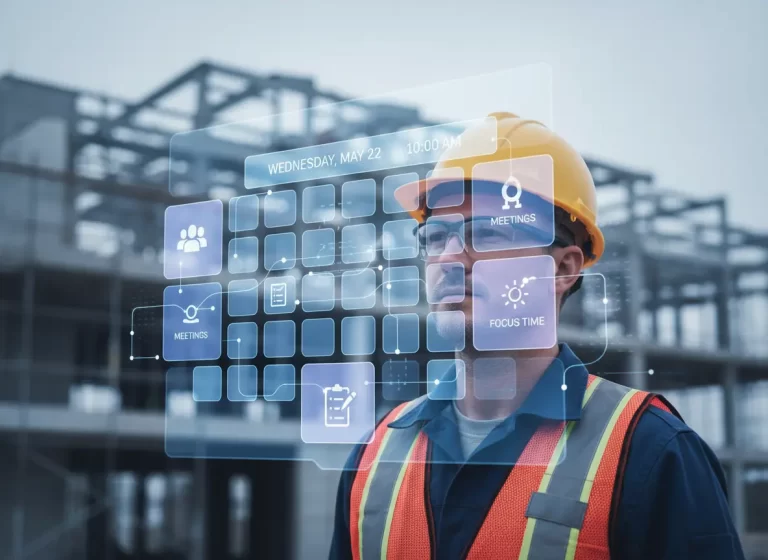

Dispatching should not feel like guesswork. But for many field teams, daily scheduling still depends on spreadsheets, whiteboards, calls, and last-minute decisions. That creates dispatch delays, crew coordination problems, schedule gaps, and frustrated customers.
When the wrong technician is assigned, when a job runs longer than expected, or when an urgent request comes in, the entire schedule can shift. Dispatchers spend the day rearranging appointments while crews wait for updates and customers wonder when someone will arrive.
AI scheduling and smart dispatch help field service teams make better scheduling decisions in real time. Instead of assigning work based only on memory or availability, smart dispatch can evaluate technician skills, job requirements, location, route efficiency, and schedule capacity so the right person gets sent to the right job.
Quick Answer
How does AI scheduling improve field service dispatch?
AI scheduling can help field service teams evaluate technician availability, skills, job requirements, location, and workload when assigning work. Smart dispatch can also help teams respond faster to delays, cancellations, urgent jobs, and other schedule changes while reducing repetitive manual scheduling work.
Quick Dispatch Check
Ask yourself a few questions.
• Do dispatchers rely on memory or spreadsheets to assign jobs?
• Do technicians arrive without the right tools or skills?
• Do schedules require constant manual adjustments?
• Do customers receive unclear arrival windows?
If these situations happen often, your dispatch process likely relies too heavily on manual scheduling.
What Intelligent Dispatch Actually Means in Field Operations
The term gets used broadly, but intelligent dispatch has a specific meaning in day-to-day field operations. It is not just faster scheduling. It is scheduling that factors in the right variables automatically so that fewer decisions have to be made manually. For teams that need better schedule visibility, MBP Calendar helps organize appointments, availability, and schedule changes in one place.
Smart Dispatch Benefits for Field Teams
| Smart Dispatch Benefit | What It Solves | Business Impact |
|---|---|---|
| Better technician matching | Jobs are assigned based on skill, location, availability, and job requirements. | Improves first-time completion and reduces costly repeat visits. |
| Fewer dispatch delays | Schedules adjust faster when jobs run long, technicians call out, or urgent work appears. | Keeps field operations moving instead of forcing dispatchers to rebuild the day manually. |
| Improved crew coordination | Dispatchers and field teams can see updates, assignments, and schedule changes more clearly. | Reduces confusion and helps crews stay aligned throughout the day. |
| Reduced schedule gaps | Open time slots, delays, and route inefficiencies become easier to identify. | Helps businesses make better use of available labor and reduce wasted time. |
| More accurate arrival windows | Real-time schedule visibility helps teams adjust customer expectations sooner. | Improves customer communication and reduces frustration from missed or vague arrival times. |
| Lower admin workload | Smart scheduling handles more of the assignment logic automatically. | Allows dispatchers to focus on exceptions, customer communication, and higher-value decisions. |
AI Technologies Powering Automated Dispatching and Scheduling
Some advanced dispatch platforms use automation, optimization rules, machine learning, or real-time operational data to evaluate multiple scheduling variables. The exact technology and capabilities vary by platform.
Machine learning improves scheduling by analyzing past jobs, travel patterns, and performance outcomes. Real-time data tracking allows the system to adjust schedules when delays, cancellations, or urgent requests happen. This keeps operations stable without constant manual intervention and helps teams stay efficient even during unexpected changes.
The Difference Between Smart and Fast
A dispatcher working quickly through a whiteboard or spreadsheet can fill a schedule fast. That is not intelligent dispatch. Intelligent dispatch means the system evaluates job requirements, technician skills, current location, availability, and workload simultaneously before making an assignment. Speed is a byproduct. Accuracy is the actual goal.
Why the Right Match Matters More Than the Closest Technician
The default instinct in manual dispatch is to send whoever is nearest. That logic breaks down when the nearest technician lacks the certification the job requires, does not have the right parts loaded, or is already running behind on a previous call. Sending the wrong person fast is more expensive than sending the right person slightly later. Intelligent dispatch makes that distinction automatically.
Where Manual Dispatch Consistently Fails
Field operations create conditions that manual scheduling cannot handle well:
- A technician calls out sick mid-morning and the entire day’s assignments need reshuffling
- An emergency job comes in and priority has to be recalculated across multiple crews
- Traffic delays push back arrival windows and downstream jobs need to be notified and reassigned
- A job runs longer than estimated and the next appointment becomes unrealistic
Each of these situations requires real-time decisions across multiple variables at once. Manual dispatch handles them reactively. Intelligent dispatch handles them automatically.
What This Means for Your Operation Day to Day
For dispatchers, intelligent scheduling removes the cognitive load of constantly juggling variables. For technicians, it means arriving at jobs prepared with the right context and tools. For customers, it means accurate arrival windows and fewer repeat visits to fix what should have been handled the first time.
How AI Scheduling Improves Technician Assignment
Smart dispatch does more than fill open time slots. It matches the right technician to the right job.
When a new work order comes in, AI scheduling reviews multiple factors at once:
- Job requirements and service type
- Required skills, certifications, or access levels
- Technician availability and work hours
- Location and proximity
- Past job performance and experience
Instead of assigning the closest technician by default, the system selects the most qualified one. This reduces errors, improves job outcomes, and keeps schedules realistic. When technician assignments depend on job details and task progress, MBP Work Management helps connect dispatch decisions with actual field work.
How Intelligent Dispatch Shapes the Technician Experience on Every Job
Most dispatch conversations focus on the back office. Fewer focus on what actually happens when a technician pulls up to a job site. That is where intelligent dispatch either pays off or falls apart.
Arriving Prepared Is Not a Small Thing
A technician who shows up without the right tools, the right certifications, or the right context for the job is not just inefficient. They are representing your business at the moment it matters most. Clients do not see your scheduling system. They see whether your technician knew what they were walking into.
Intelligent dispatch closes that gap. When assignments are matched on skills, job history, and service type rather than just availability and proximity, technicians arrive with the right equipment loaded, the right certifications in hand, and the right background on the client. That preparation is what separates a clean first visit from a costly return trip.
First-Time Fix Rates Are a Profit Metric, Not Just a Performance Stat
Every repeat visit to a job that should have been resolved the first time carries a real cost. There is the fuel, the technician’s time, the rescheduling overhead, and the client relationship damage that follows. Poor technician-job matching can contribute to repeat visits, especially when the assigned technician lacks the required skills, parts, certification, or job context.
Intelligent dispatch can improve technician-job matching by considering relevant skills, availability, location, and job requirements before an assignment is made. Not the nearest one. Not the one with an open slot. The right one. That distinction, made consistently across dozens of daily assignments, compounds into measurably lower rework rates and stronger margins over time.
When Technicians Trust the Schedule, Performance Improves
Technicians who constantly receive mismatched assignments develop a defensive mindset. They second-guess job details, over-communicate uncertainty to clients, and spend time on-site figuring out what should have been known before arrival. That friction is invisible in a spreadsheet but very visible to the client standing in front of them.
When dispatch consistently sends technicians to jobs that match their skills and equips them with complete job context in advance, confidence follows. Technicians move through jobs faster, handle on-site decisions more decisively, and deliver a client experience that reflects the actual quality of your team.
Fewer Repeat Visits Means More Capacity Without More Headcount
Every first-time fix that replaces a return visit frees up a slot in the schedule. Reducing unnecessary repeat visits can free up schedule capacity for additional work. The actual impact depends on team size, travel time, job duration, and how frequently return visits occur. Intelligent dispatch does not just improve quality. It quietly expands what your existing team can handle.
Respond Faster to Unexpected Schedule Changes
Field operations rarely follow the plan exactly. Traffic delays, emergency jobs, and technician absences happen every day.
AI scheduling adjusts automatically when conditions change.
• Real-time job reassignment
If a technician runs late, the system redistributes nearby work.
• Dynamic route optimization
Travel paths update based on traffic and location changes.
• Priority job handling
Urgent service requests move to the top of the schedule immediately.
• Instant team visibility
Dispatchers see schedule changes as they happen.
Fast response prevents small disruptions from becoming full-day delays.
Flexible scheduling keeps operations stable under pressure.
Key Benefits of Workforce Automation
Smart dispatch improves more than scheduling. It changes how teams operate.
Higher first-time fix rates
Technicians arrive prepared, reducing repeat visits.
Reduced travel time
Optimized routes cut fuel costs and wasted drive time.
Real-time schedule adjustments
The system reshuffles jobs when delays or absences happen.
Improved customer experience
Accurate arrival times and faster resolution build trust.
These gains compound across weeks and months, leading to stronger margins and happier clients.
Implementing Smart Dispatch With MyBusinessPortal.Cloud
Smart dispatch works best when scheduling decisions are supported by accurate operational data. Start by organizing technician availability, skills, work hours, territories, service types, job requirements, and priorities.
MBP connects scheduling with other business information such as jobs, customer records, employee information, and work management. This gives dispatchers more context when reviewing assignments and adjusting daily schedules.
Any automated assignment, route optimization, AI recommendation, or dynamic rescheduling capability should be described according to the features currently enabled in your MBP configuration.
Smart Scheduling
Keep schedules, crews, and job updates connected.
MBP Calendar and Work Management help field teams manage schedules, dispatch updates, job progress, and crew coordination in one connected workflow. Reduce schedule gaps, missed updates, and manual dispatch stress.
Explore MBP Calendar Explore Work Management Request a DemoRelated Scheduling and Dispatch Resources
- How Real-Time Scheduling Helps Small Businesses Avoid Delays
- How Scheduling Overlaps Hurt Small Business Productivity
- Is Manual Scheduling Causing Gaps in Your Workflow?
Frequently Asked Questions
What is AI scheduling in field service operations?
AI scheduling uses real-time data to assign technicians based on skills, availability, location, and job requirements. It replaces manual guesswork with data-driven decisions.
How is smart dispatch different from manual scheduling?
Manual scheduling relies on memory and static calendars. Smart dispatch evaluates multiple variables instantly and adjusts automatically when conditions change.
How does AI improve technician assignment?
It matches job requirements with technician skills, certifications, availability, and proximity. This increases first-time fix rates and reduces rework.
Conclusion
Manual scheduling slows teams down and increases mistakes. AI scheduling replaces guesswork with data-driven decisions, ensuring the right technician reaches the right job at the right time.
MyBusinessPortal.Cloud connects Work Management, Calendar, CRM, and HR into one unified workflow. Work Management tracks job progress and requirements. The Calendar keeps schedules accurate and flexible. CRM ensures technicians have the right customer context before arrival. HR tools help balance workloads, availability, and accountability across the workforce.
When these systems work together, dispatch becomes faster, smarter, and more reliable. Optimize your scheduling process with MyBusinessPortal.Cloud and keep your field operations efficient, responsive, and ready to scale.