
The shift to a “remote-first” mentality has fundamentally changed the corporate landscape, bringing both incredible freedom and unique hurdles. For Human Resources professionals, managing distributed teams effectively means moving beyond traditional methods and embracing a new digital reality. Are you struggling with disconnected employees or disjointed administrative processes? You are not alone.
At MyBusinessPortal.Cloud (MBP), we understand that the backbone of successful flexible work is robust infrastructure. We provide the HR technology needed to bridge the physical gap between your company and your talent. In this post, you will learn actionable strategies to overcome common remote work obstacles, ensuring your organization thrives in this new normal.
Quick Answer: What are the best remote HR practices for distributed teams?
The best remote HR practices for distributed teams include centralizing employee records, creating structured virtual onboarding, setting clear communication expectations, tracking HR tasks in one system, supporting employee engagement, and keeping compliance documents accessible. Remote HR software helps managers organize people, policies, schedules, requests, and workflows without relying on scattered files or manual follow-ups.
Remote HR Challenges and Fixes
| Remote HR Challenge | What It Causes | How HR Software Helps |
|---|---|---|
| Scattered employee records | HR wastes time searching folders, spreadsheets, and emails. | Keeps employee information in one central system. |
| Weak virtual onboarding | New hires feel confused or disconnected. | Organizes onboarding tasks, forms, documents, and reminders. |
| Missed HR requests | Time-off, document, and policy requests get delayed. | Tracks requests and next steps in one workflow. |
| Poor manager visibility | Leaders do not know what employees need or where tasks stand. | Gives managers clearer workforce visibility. |
| Inconsistent communication | Remote employees receive updates at different times. | Keeps HR notices, records, and updates easier to access. |
| Compliance document gaps | Policies and acknowledgments become hard to verify. | Stores HR documents and employee records more consistently. |
| Low engagement | Remote employees may feel disconnected from the team. | Supports structured check-ins, feedback, and follow-up processes. |
Why Remote HR Fails Without the Right Systems
Remote work sounds flexible. For HR, it often feels fragile.
Employees feel disconnected. Managers lack visibility. Documents live in too many places. Simple requests turn into long threads.
The result is predictable:
- New hires struggle to ramp up
- Engagement drops quietly
- HR chases paperwork instead of supporting people
- Policies get applied inconsistently
- Compliance risks increase
This is not an effort issue. It is a systems issue.
Remote HR works when structure replaces guesswork and tools replace manual follow-ups. Before performance improves, alignment has to exist.
And alignment starts with HR systems that work anywhere. And alignment starts with how HR operates behind the scenes.
Why Remote Workforce Management Requires New HR Systems
The transition to remote HR is about more than just allowing employees to work from home; it requires a complete cultural and operational overhaul. In a traditional office, culture is often built through face-to-face interactions and spontaneous collaboration. In a remote-first world, these interactions must be intentional and supported by the right tools.
To succeed, HR departments must leverage talent management systems that are accessible from anywhere. This ensures that performance reviews, payroll, and benefits administration are handled seamlessly, regardless of time zones. By adopting cloud-based solutions, you empower your workforce with autonomy while maintaining the oversight necessary for compliance and operational efficiency.
Remote HR Best Practices for Managing Distributed Teams
Managing a workforce you cannot see requires trust and distinct strategies to maintain productivity and morale. Here is how modern organizations are winning with distributed teams:
How Remote HR Software Supports Distributed Teams
Remote HR software helps distributed teams stay organized by giving employees, managers, and HR staff access to the same workforce information. Instead of relying on email threads, spreadsheets, and separate folders, teams can manage employee records and HR workflows in one connected system.
| HR Need | How Remote HR Software Helps |
|---|---|
| Employee records | Keeps employee information organized and easier to find. |
| Virtual onboarding | Tracks forms, training steps, introductions, and new-hire tasks. |
| HR documents | Stores policies, acknowledgments, and important files in one place. |
| Employee requests | Helps track time-off, document, and HR support requests. |
| Manager visibility | Shows workforce information without constant manual follow-ups. |
| Team engagement | Supports check-ins, feedback, and structured communication. |
| Remote consistency | Helps apply HR processes more evenly across locations. |
How to Improve Employee Engagement in Remote Teams
Isolation is a major risk in remote work. To combat this, companies must utilize digital platforms to foster connection. Regular check-ins, virtual team-building events, and open communication channels are vital for maintaining high employee engagement. When employees feel heard and connected, retention rates stabilize.
How Virtual Onboarding Helps Remote Employees Succeed Faster
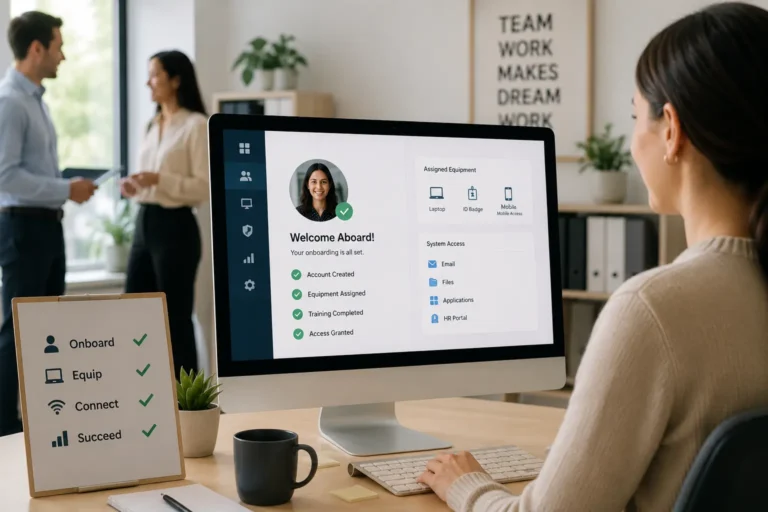
First impressions matter more than ever. Virtual onboarding must be structured and engaging. Instead of handing a new hire a stack of papers, use digital portals to automate documentation and schedule video introductions with key team members. A smooth digital entry sets the tone for a productive tenure.
Why Asynchronous Communication Improves Remote Team Productivity
In a flexible work environment, demanding immediate responses can lead to burnout. Successful remote HR strategies encourage asynchronous communication, allowing team members to work during their peak productivity hours without the pressure of being “always on.”
How HR Software Simplifies Remote Workforce Management
At MyBusinessPortal.Cloud, we simplify the complexity of managing a global or remote workforce. When you utilize our platform, you can expect a centralized hub that integrates essential HR functions into one intuitive interface.
The process is designed to be user-friendly. We help you digitize your employee records, automate routine tasks, and provide analytics that offer deep insights into your workforce’s performance. By centralizing your data, MBP eliminates the silos that often plague distributed teams, ensuring that your HR department operates as a cohesive unit. Our HR technology evolves with your business, providing the scalability needed to grow without administrative friction.
A stronger remote HR process works best when employee records connect with scheduling, daily work, and business operations. MBP helps teams connect HR management with team scheduling, work management, and CRM so employee data, daily tasks, and customer workflows stay organized across locations.
Manage Remote HR in One Connected System
MBP HR helps teams organize employee records, onboarding tasks, HR documents, schedules, requests, reminders, and workforce workflows in one platform.
If your remote HR process still depends on spreadsheets, email threads, and manual follow-ups, MBP gives your team a cleaner way to manage employees from anywhere.
Explore MBP HRBuild a Stronger Remote Workforce With Better HR Systems
Navigating the challenges of a remote-first world does not have to be an uphill battle. By prioritizing employee engagement, refining your virtual onboarding, and leveraging the right HR technology, you can turn potential obstacles into competitive advantages. MyBusinessPortal.Cloud is here to support your journey, providing the tools necessary to manage your talent effectively from anywhere in the world. Embrace the future of work today and ensure your organization remains resilient and connected.
Frequently Asked Questions
What is remote HR?
Remote HR is the process of managing employees who work outside a traditional office. It includes onboarding, payroll, performance reviews, employee records, communication, and compliance through digital systems.
Why does remote HR fail without the right systems?
Remote HR fails when employee records, requests, policies, and communication are scattered across different tools. This creates confusion, slow responses, inconsistent processes, and poor visibility for managers.
How can HR teams keep remote employees engaged?
HR teams can keep remote employees engaged through regular check-ins, clear communication, virtual team activities, and accessible feedback channels. Employees stay more connected when they feel heard, supported, and included.
Why is virtual onboarding important for remote teams?
Virtual onboarding gives new hires a structured way to learn company processes, complete documents, and meet key team members online. A clear digital onboarding process helps employees feel prepared from day one.
How does asynchronous communication prevent burnout?
Asynchronous communication reduces pressure to respond immediately across different schedules or time zones. It gives employees more control over their workday while still keeping communication organized and documented.
When should a business use remote HR software?
A business should use remote HR software when employee records, onboarding tasks, HR requests, policy documents, and workforce communication become difficult to manage across locations. Remote HR software helps centralize employee information, reduce manual follow-ups, and create more consistent HR workflows for distributed teams.