
You don’t need to be a tech giant to benefit from data. In fact, small service-based businesses stand to gain the most when they use data to make smarter decisions especially when that data comes from a CRM.
If you’re a contractor, technician, or small team managing leads, jobs, and follow-ups, your CRM already holds valuable information. The key is knowing how to use it to grow revenue, cut waste, and work more efficiently.
Let’s break down how CRM insights can help you drive profits without hiring a data analyst.
Quick Answer
How can small businesses use CRM insights to increase profits?
CRM insights help small businesses understand customer behavior, track sales performance, improve follow-ups, and identify opportunities that increase revenue.
By connecting CRM data with daily operations, businesses can reduce missed opportunities, improve customer relationships, and make better decisions.
CRM Benefits Table
| CRM Insight | Business Benefit |
|---|---|
| Customer tracking | Know who to follow up with |
| Sales trends | Identify high-value products/services |
| Workflow analysis | Optimize team efficiency |
| Customer segmentation | Target best customers for upsells |
| Activity tracking | Reduce missed opportunities |
| Performance metrics | Measure ROI of campaigns |
| Example | How CRM Helps |
|---|---|
| Email follow-up | Automatic reminders to contact leads |
| Service history | Personalized customer experience |
| Sales pipeline | Visualize deal stages and next steps |
| Marketing segmentation | Focus on profitable customer groups |
Small businesses and contractors can leverage MBP to manage every part of their operations efficiently:
- CRM software – Manage leads, customers, follow-ups, and track every interaction.
- Work Management software – Organize jobs, tasks, workflows, and job progress.
- Calendar software – Schedule appointments, check team availability, and manage recurring events.
- HR software – Track employee records, assignments, time off, and performance reviews.
- Inventory software – Track tools, materials, stock levels, restocking, and job-specific items.
- Accounting software – Manage invoices, payments, expenses, and job-related finances.
By connecting CRM with Work Management, Calendar, HR, Inventory, and Accounting in MBP, small businesses can get a full operational view without juggling multiple disconnected tools.
CRM Insights vs Manual Customer Tracking
| Manual Tracking | CRM-Based Insights |
|---|---|
| Customer details stored in different files | Customer information organized in one system |
| Follow-ups depend on memory | Automated reminders and activity tracking |
| Difficult to measure sales performance | Clear pipeline and performance visibility |
| Limited customer history | Complete interaction records |
What Kind of Data Lives in a CRM?
Your CRM isn’t just a digital phonebook. It tracks real-time activity about how customers interact with your business.
Here’s the kind of data you’re already collecting:
- Lead sources – Where new customers are finding you
- Response times – How quickly your team follows up
- Win/loss rates – How many quotes turn into paying jobs
- Customer activity – Who books repeat jobs and when
- Pipeline movement – Where leads drop off or get stuck
This information is often hiding in plain sight. You just need to use it.
Using CRM software helps businesses organize customer data, automate follow-ups, and track opportunities from first contact to completed jobs.
Important CRM Data Small Businesses Should Track
A CRM becomes more valuable when businesses know which information to monitor. Tracking the right data helps identify sales opportunities and operational problems before they affect revenue.
| CRM Data | Business Impact |
|---|---|
| Lead Source | Shows which marketing channels bring valuable customers |
| Response Time | Helps improve customer follow-up speed |
| Conversion Rate | Shows how many leads become paying customers |
| Customer History | Improves repeat business opportunities |
| Pipeline Status | Shows where sales opportunities are delayed |
How CRM Insights Translate to Profit
Once you start reviewing patterns in your CRM, you’ll uncover opportunities to tighten your workflow and increase earnings.
1. Improve Your Follow-Up Process
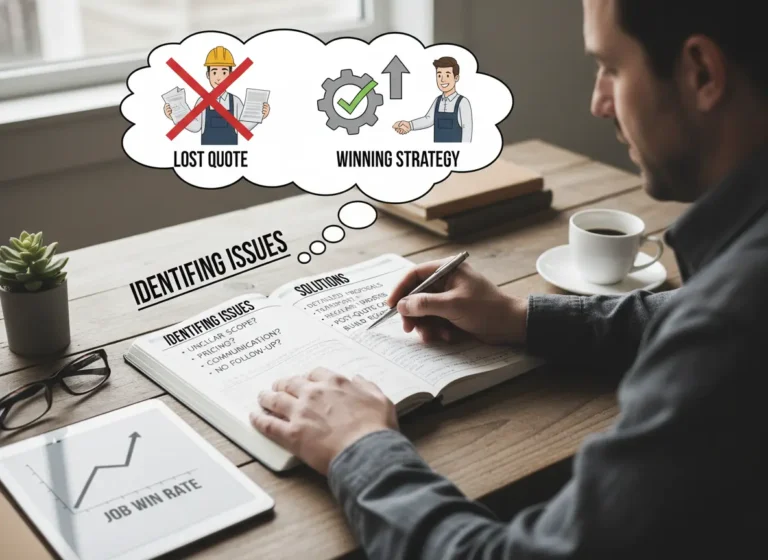
Data shows when leads go cold. If most are dropping off after the first quote, it means you need better follow-up and faster replies. Fixing that means fewer lost jobs.
2. Focus on Top-Performing Sources
See which platforms bring in your best-paying clients. If referrals outperform paid ads, shift your marketing dollars accordingly.
3. Spot Repeat Clients (and Reward Them)
Repeat customers are cheaper to win and more likely to refer others. Use your CRM to identify loyal clients and send special offers or follow-up calls at just the right time.
4. Identify Your Sales Bottlenecks
If quotes pile up in the “waiting for response” stage, maybe you’re sending them too late. Or maybe clients need reminders. CRM reports help you diagnose what’s slowing things down.
5. Reduce Wasted Time
If a lead keeps rescheduling or ghosting, your CRM can flag them early. This helps you avoid wasting time on unqualified clients and focus more on those ready to book.
Connecting CRM with Work Management software helps teams move customer commitments into organized tasks and completed projects.
You Don’t Need Fancy Dashboards to Start
Start with the basics:
- Review how many quotes turn into jobs
- Track which clients book again
- Look at how long it takes to move from quote to payment
Even these small insights can guide big improvements.
How Small Businesses Turn CRM Data Into Action
CRM data only creates value when businesses use it to improve daily decisions.
- Review lost opportunities to understand why leads stop progressing.
- Identify customers who are likely to return for additional services.
- Track sales stages to improve follow-up timing.
- Compare lead sources to focus marketing efforts.
- Monitor team activity to improve customer response times.
Small improvements based on CRM insights can create stronger customer relationships and more predictable revenue.
Turn CRM Data Into Better Business Decisions
MBP CRM helps small businesses organize leads, track customer activity, manage follow-ups, and connect customer insights with daily operations.
Explore MBP CRMCRM Insights FAQs
How does CRM data improve profits?
CRM data highlights customer behavior, follow-up opportunities, and high-value segments to help businesses increase revenue.
What insights should small businesses track?
Track leads, sales trends, customer activity, pipeline stages, and campaign performance for data-driven decision-making.
Can CRM reduce missed follow-ups?
Yes. Automated reminders and activity tracking keep teams on schedule and ensure no lead is overlooked.
Is MBP suitable for small business CRM?
Yes. MBP integrates CRM, Work Management, Calendar, Inventory, and Accounting in one platform to simplify operations.
How often should businesses review CRM insights?
Weekly or monthly, depending on sales volume and campaign activity, to stay proactive in decision-making.
What CRM metrics should small businesses monitor?
Small businesses should monitor lead sources, response times, conversion rates, customer activity, sales pipeline stages, and repeat customer behavior to identify growth opportunities.
How does CRM analytics help contractors?
CRM analytics helps contractors understand which leads convert, which customers return, and where sales opportunities are being lost.
Can CRM insights improve customer retention?
Yes. CRM insights help businesses identify customer patterns, schedule follow-ups, personalize communication, and improve long-term relationships.
Final Take
CRM tools aren’t just for contact storage. They hold the patterns and performance data that can help your business grow faster and smarter. You already have the information, now it’s time to use it.
At MyBusinessPortal.cloud, our CRM was built for small service-based teams who want to stay lean, work smarter, and get better results from every lead. It works alongside your calendar and work management tools to give you a full view of your jobs, clients, and performance all in one place.