


When a job runs behind schedule or a detail gets missed, it’s easy to blame the field crew or a misstep in the office. But more often than not, the real problem lies in how your teams communicate or don’t.
Poor communication between office staff and field teams might seem like a small issue, but it adds up quickly. Every missed update, unclear instruction, or wrong address eats into your profit and damages your reputation.
Why Communication Breaks Down Between Office and Field Teams
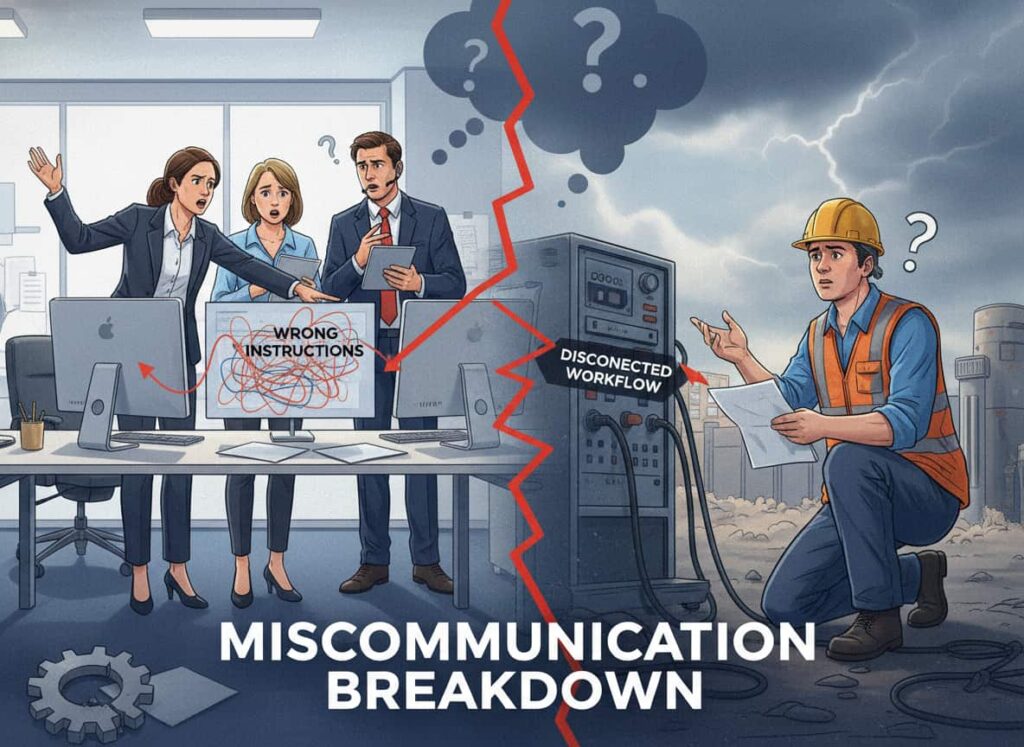
Contractor and service teams rarely work in one location. Office staff manage scheduling, customer communication, and planning. Field crews handle installations, repairs, or project execution.
When these teams rely on texts, phone calls, or scattered notes, information becomes fragmented. Important updates may reach some employees but not others.
This creates small gaps in communication that grow into operational problems.
A structured communication system ensures both office and field teams work from the same information.
How One Missed Update Creates Costly Project Delays
A single miscommunication can delay a job, waste labor, and create tension between teams. Over time, those small breakdowns turn into consistent losses you barely notice until profits shrink.
Quick Answer
What happens when office and field teams do not communicate well?
Poor communication leads to delays, rework, missed updates, lower efficiency, and frustrated customers. Over time, these issues hurt profit and make daily operations harder to manage.
Why Contractor Businesses Struggle With Office and Field Communication
Communication problems usually start when updates are spread across text messages, phone calls, emails, spreadsheets, and handwritten notes. Office staff may have one version of the schedule while field crews work from another. Without a centralized communication and work management system, important information gets missed, creating delays, rework, customer complaints, and lost productivity.
Let’s break down the hidden costs of bad communication and how to avoid them.
The Hidden Business Costs of Poor Team Communication
1. How Missed Updates Cause Scheduling Delays
Field teams rely on the office for job updates, client information, and scheduling changes. If those updates don’t get relayed quickly and clearly, the result is often wasted trips, idle time, or jobs that need to be redone.
A technician who shows up at the wrong address or at the wrong time is not just frustrating, they’re burning gas, hours, and customer trust.
2. Why Miscommunication Leads to Expensive Rework
When job details like scope of work, materials, or special instructions get lost in translation, your crew is left guessing. And when they guess wrong, the work has to be done again.
Rework not only slows down the current job, it throws off your entire schedule for the week. Worse, it can lead to client complaints and poor reviews.
3. How Poor Visibility Creates Workforce Imbalances
Without real-time visibility, it’s hard for office teams to see who’s available and what’s been completed. This often leads to overbooking some workers while others sit idle.
Poor communication creates uneven workloads, staff burnout, and missed revenue opportunities from unassigned hours.
4. Why Communication Problems Reduce Employee Morale
Nobody wants to work in chaos. When your team is constantly confused or correcting mistakes that weren’t theirs, morale drops.
Office staff get blamed for scheduling issues. Field crews feel unsupported. And eventually, your best workers start looking elsewhere.
5. How Poor Communication Hurts Customer Relationships
From a client’s perspective, poor internal communication feels like disorganization. Showing up late, doing the wrong job, or needing to reschedule multiple times sends a message: this company doesn’t have it together.
Even if you do good work in the end, most customers won’t come back after a bad experience and they’ll tell others.
How to Improve Communication Between Office and Field Teams
The real cost of poor communication isn’t just a few annoying mix-ups. It’s lost time, frustrated employees, and missed revenue. If your office and field teams aren’t aligned, you’re leaving money on the table every week.
That’s why MyBusinessPortal.cloud brings your office, field crew, and job data together in one place. With built-in tools for calendar scheduling, CRM follow-ups, and work management, your team always knows what’s happening and what’s next.
Office and Field Communication FAQs
Why is communication between office and field teams important?
Communication between office and field teams ensures everyone works from the same information. When schedules, job details, client updates, and task changes are shared clearly, teams can complete work more efficiently. Strong communication reduces delays, mistakes, and confusion across the business.
What happens when office and field teams do not communicate well?
Poor communication leads to missed updates, scheduling errors, duplicated work, delayed projects, and frustrated customers. Small communication gaps often create larger operational problems that affect productivity and profitability. Over time, these issues can damage both employee morale and customer relationships.
Why do communication breakdowns happen in contracting businesses?
Communication breakdowns often occur because information is spread across phone calls, text messages, emails, paper notes, and verbal conversations. Important updates may reach some employees but not others. Without a centralized system, critical information becomes fragmented and difficult to track.
How do missed updates affect project timelines?
When field teams miss scheduling changes, client instructions, or job updates, they may arrive at the wrong location, perform incorrect work, or waste valuable time. These mistakes create delays that impact not only the current job but also future scheduled work. One missed update can affect multiple projects.