
Customer expectations are rising fast, but many businesses still manage relationships with disconnected tools, delayed follow-ups, and incomplete customer records. When teams cannot see the full customer history, service slows down, communication feels inconsistent, and opportunities quietly slip away.
The future of CRM is not just about adding more technology. It is about using CRM innovation to create real business outcomes: faster response times, better customer retention, cleaner data, stronger team visibility, and more personalized service. AI, automation, predictive analytics, mobile access, and connected workflows help businesses move from reactive customer management to proactive customer experience.
For growing teams, the right CRM system can connect customer data with scheduling, work management, follow-ups, and daily operations. That makes it easier to serve customers well while reducing manual admin work behind the scenes.
Quick Answer
How is the future of CRM improving customer experience?
The future of CRM is improving customer experience by using AI, automation, predictive insights, mobile access, and connected business tools to help teams respond faster and provide more personalized service.
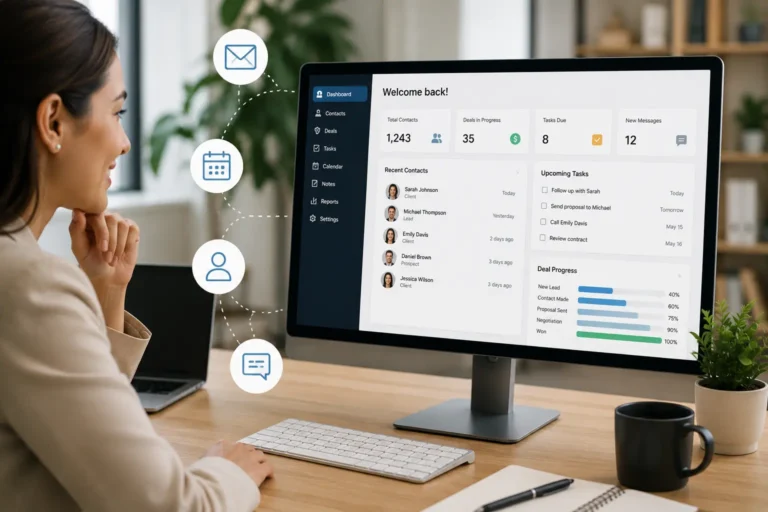
Modern CRM systems do more than store customer information. They connect customer data with scheduling, work management, follow-ups, and daily operations so businesses can improve relationships while reducing manual work.
How AI Turns CRM Into a Smarter Growth Tool
The future of CRM is intelligent. Gone are the days of manual data entry and guesswork. The most significant shift is the integration of Artificial Intelligence (AI) and predictive analytics directly into CRM platforms. This creates a truly data-driven CRM that works for you. AI in CRM automates repetitive tasks like data logging and follow-up reminders, freeing your team to focus on building relationships. More powerfully, predictive analytics CRM sifts through your customer data to identify patterns, forecast future sales trends, and even predict which customers are at risk of leaving. This allows you to be proactive, personalizing outreach and offering solutions before problems arise, transforming your customer experience from reactive to predictive. For teams ready to centralize customer data and reduce manual tracking, MBP CRM helps connect customer records, follow-ups, and job details in one place.
Traditional Customer Management vs Modern CRM Software
| Traditional Customer Management | Modern CRM Software |
|---|---|
| Customer information stored across different files | Customer records centralized in one system |
| Manual follow-ups and reminders | Automated workflows and notifications |
| Limited customer history visibility | Complete customer interaction history |
| Reactive customer service | Proactive customer engagement |
| Separate tools for sales and operations | Connected business workflows |
CRM Innovations and Their Business Impact
| CRM Innovation | What It Does | Business Impact |
|---|---|---|
| AI-powered insights | Analyzes customer behavior, activity patterns, and sales opportunities. | Helps teams prioritize better leads, personalize outreach, and act before customers disengage. |
| Automated follow-ups | Triggers reminders, messages, and next steps based on customer activity. | Reduces missed follow-ups and improves customer response consistency. |
| Predictive analytics | Uses past data to identify trends, risks, and likely customer needs. | Helps businesses forecast demand, spot retention risks, and plan smarter service actions. |
| Mobile CRM access | Gives field and office teams access to customer records from any device. | Improves response times and keeps teams aligned when work happens outside the office. |
| Connected workflows | Links CRM data with scheduling, work management, and daily operations. | Turns customer information into action instead of leaving it trapped in a separate system. |
| Real-time customer history | Keeps notes, job history, follow-ups, and updates in one shared record. | Improves service quality because every team member sees the same current information. |
Essential CRM Features for Better Customer Experience
| CRM Feature | Customer Experience Benefit |
|---|---|
| Customer History Tracking | Helps teams understand previous interactions and provide better service. |
| Automated Follow-Ups | Prevents missed opportunities and improves response consistency. |
| Mobile CRM Access | Allows teams to manage customer information from anywhere. |
| Workflow Integration | Connects CRM data with scheduling, tasks, and daily operations. |
| Reporting and Insights | Helps businesses make better decisions using customer data. |
Why Cloud and Mobile CRM Matter More Than Ever
Today’s business environment is no longer confined to the office. To deliver an exceptional customer experience, your team needs access to critical information anytime, anywhere. That same real-time access becomes even more powerful when combined with automated scheduling systems that reduce delays and improve customer satisfaction from the very first interaction. This is where cloud CRM and mobile CRM become essential. By moving your customer data to a secure cloud platform, you ensure that every team member has access to the most up-to-date information, whether they’re in the office, at home, or on the road. The benefits are immediate:
- Access Customer Data Anywhere: Access customer histories, update deals, and collaborate with your team from any device with an internet connection.
- Keep Teams Updated in Real Time: Eliminate data silos. When a sales rep updates a contact on their phone, the change is instantly visible to the support team back at HQ.
- Help Teams Work Faster: Empower your field teams to close deals faster and resolve issues on the spot with all the data they need in their pocket.
- Scale Without More Complexity: A cloud CRM grows with your business, adapting to your needs without expensive hardware or IT overhead.
How MBP Brings Modern CRM Into One System
Adopting next-generation technology doesn’t have to be complicated. At MyBusinessPortal.Cloud, we’ve built our platform around these core CRM innovations to give you a competitive edge. Our intuitive cloud CRM solution comes ready with the tools you need to become a data-driven organization. We make it simple to centralize your customer information, automate key workflows, and gain actionable insights that drive growth. Getting started with MBP means empowering your team with a mobile-first platform that enhances collaboration and elevates every customer interaction. We handle the technical complexities so you can focus on what matters most: building stronger, more profitable relationships.
Build a CRM System Ready for Future Growth
MBP CRM helps businesses organize customer records, follow-ups, job history, and service details in one connected system.
Connect CRM with Calendar, Work Management, HR, and Accounting to give your team better visibility and create smoother customer experiences.
Explore MBP CRM Request a DemoWhy Integration Defines a Future-Ready CRM
Every CRM vendor claims to be built for the future. Most of them mean they have added AI features to an otherwise isolated platform. That is not future-ready. That is a feature update dressed as a strategy.
A CRM that cannot communicate with the rest of your operation is still a silo, regardless of how intelligent it is on its own. The actual measure of CRM readiness is how deeply it connects to the other systems your business runs on.
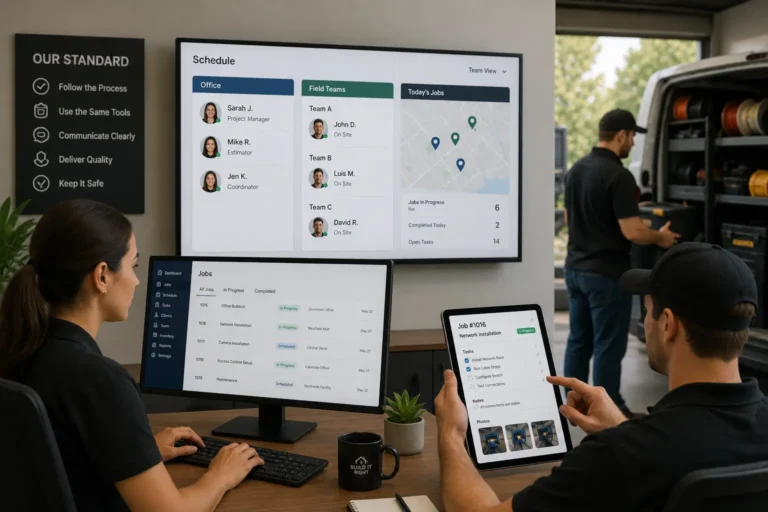
A future-ready CRM becomes more valuable when it connects with work management software, because customer details can support job assignments, task visibility, and real-time progress updates.
Why Isolated CRM Systems Create Costly Gaps
When your CRM sits separately from your scheduling, invoicing, and work management tools, your team fills the gaps manually. A job gets completed but the CRM is not updated until someone remembers to do it. A client calls with a question and the person answering has no visibility into the current job status because that data lives in a different system. An invoice goes out without the full job history attached because billing and client management never shared the same data.
These gaps do not feel catastrophic in isolation. Cumulatively they erode the client experience, slow down operations, and create the kind of administrative drag that quietly limits how fast a business can grow.
How Integration Turns CRM Data Into Action
A CRM connected to your calendar, work management, and HR tools does something an isolated CRM cannot: it turns client data into real-time operational decisions.
When a new job is booked, the CRM already knows the client history. When a technician is assigned, the scheduling system already has the job requirements. When work is completed, the invoicing system already has what it needs to bill without manual input. The data that would otherwise require three separate entries in three separate tools moves automatically through one connected system.
That is not a convenience feature. That is the difference between a CRM that records what happened and one that actively shapes what happens next.
For service teams, better customer follow-up helps turn CRM data into timely communication instead of forgotten reminders or delayed responses.
Today’s CRM Setup Shapes Tomorrow’s Growth
Business operations do not get simpler as teams grow. More clients, more jobs, more staff, and more moving parts mean more coordination required across every function. A CRM that integrates deeply now builds the infrastructure that handles that complexity later without requiring a full system rebuild at every growth stage.
A CRM that stays isolated forces a harder choice down the road: either accept the growing operational cost of disconnected tools or undertake a disruptive migration when the business can least afford the disruption.
Build a CRM System Ready for What’s Next
The evolution of CRM is clear: it’s becoming more intelligent, accessible, and deeply focused on the customer experience. Trends like AI in CRM, predictive analytics, and mobile cloud platforms are no longer futuristic concepts; they are essential tools for modern business success.
By embracing this CRM innovation together with Calendar, HR, and Work Management solutions, you can streamline scheduling, empower your workforce, and connect every part of your operation in one place. This unified approach helps you anticipate customer needs, improve team productivity, and build a more resilient, profitable business.
MyBusinessPortal.Cloud is committed to providing an all-in-one, data-driven platform that keeps you ahead of the curve. Ready to transform how your business runs? Explore MBP today.
CRM Software
Build a CRM system that supports better customer experience.
MBP CRM helps small businesses organize customer records, follow-ups, job history, and service details in one connected system. Give your team better visibility and make every customer interaction easier to manage.
Explore MBP CRM Request a DemoRelated CRM Resources
- CRM vs Spreadsheets: Which Is Better for Customer Management?
- How CRM Helps Contractors Follow Up Without Feeling Pushy
- How CRM Software Improves Business Operations Beyond Sales and Marketing
Frequently Asked Questions
What is the future of CRM?
The future of CRM focuses on intelligence, automation, and real-time data access. Modern systems use AI and predictive analytics to help businesses anticipate customer needs instead of reacting to them. This shift allows teams to improve service, increase retention, and make faster decisions.
How does AI improve CRM systems?
AI improves CRM systems by automating repetitive tasks like data entry and follow-ups. It also analyzes customer behavior to predict trends and identify opportunities. This helps businesses act earlier, personalize communication, and reduce missed opportunities.
Why is cloud-based CRM important?
Cloud-based CRM allows teams to access customer data from anywhere at any time. This ensures everyone works with up-to-date information, whether in the office or in the field. It also removes the need for complex infrastructure and supports business growth more easily.
What problems do disconnected CRM systems cause?
Disconnected CRM systems create gaps between departments and slow down operations. Teams often need to manually update data across different tools, which leads to errors and delays. Over time, this reduces efficiency and negatively impacts customer experience.
What features should businesses look for in CRM software?
Businesses should look for customer data management, automated follow-ups, reporting, mobile access, workflow automation, integrations, and customer history tracking.
How does CRM software improve customer retention?
CRM software improves customer retention by helping businesses track customer interactions, respond faster, personalize communication, and maintain consistent follow-ups.
Can small businesses benefit from CRM software?
Yes. Small businesses can use CRM software to organize customer information, improve follow-ups, manage leads, and create better customer experiences without relying on manual tracking.