Without a clear system in place, tasks get missed, team members lose track of priorities, and productivity takes a hit.
That’s where a work management system comes in not just as a to-do list, but as a full-on operating system for your business.
Quick Answer
How do work management systems keep teams aligned?
Work management systems keep contractor teams aligned by centralizing tasks, schedules, job updates, communication, and customer information in one place.
This helps office staff and field crews understand responsibilities, track progress, and complete jobs with fewer communication gaps.
What Is Team Alignment in Work Management?
Team alignment means everyone understands what needs to be done, who is responsible, where the job stands, and what comes next.
For contractors and growing businesses, this is critical because one missed update affects the whole workflow.
A team is aligned when:
- Tasks are clear
- Job owners are assigned
- Schedules are visible
- Updates are shared quickly
- Customer details are easy to find
- Team members know the next step
- Managers see progress without chasing people
Without alignment, jobs slow down fast.
Why Teams Fall Out of Sync Without a Work Management System
Teams fall out of sync when job information lives in too many places.
One person has the text message. Another has the spreadsheet. Someone else has the paper form. The manager has the schedule, but the crew has a different update.
That is where problems start.
Common alignment issues include:
- Missed task updates
- Conflicting schedules
- Duplicate work
- Delayed handoffs
- Unclear responsibilities
- Lost job notes
- Slow customer follow-up
- Managers chasing status updates manually
A work management system reduces this by creating one shared place for job activity.
How Contractors Create Better Workflow Alignment
Contractors often struggle with team alignment because job information moves between different tools, conversations, and people. A connected workflow gives everyone access to the same information.
A contractor work management system helps teams:
- Assign clear responsibilities
- Track job progress in real time
- Share updates between office and field teams
- Reduce repeated communication
- Keep customer and job details connected
When everyone works from the same system, teams spend less time searching for information and more time completing jobs.
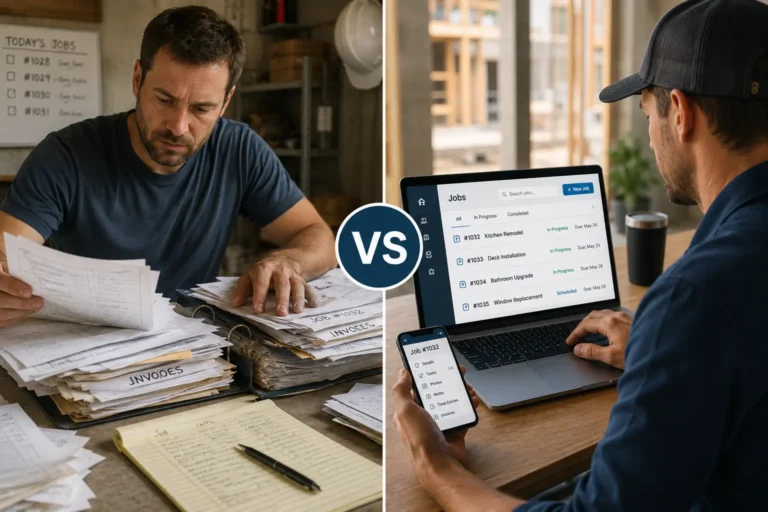
Before and After Work Management Systems
| Workflow Area | Before a Work Management System | After a Work Management System |
|---|---|---|
| Job updates | Shared through calls, texts, or memory | Stored in one connected system |
| Task ownership | Unclear or assumed | Assigned and easier to track |
| Scheduling | Spread across calendars, notes, or spreadsheets | Easier to view and manage |
| Customer details | Stored in different places | Connected to the job record |
| Team communication | Scattered across multiple channels | More organized around the work |
| Job status | Requires manual follow-up | Easier for managers to review |
| Handoffs | Details get missed between people | Next steps stay clearer |
Keep Your Team Working From the Same Page
MBP helps teams organize jobs, updates, schedules, work orders, and responsibilities in one connected work management system so fewer tasks fall through the cracks.
Explore Work ManagementCommon Team Alignment Problems
Teams usually do not fall behind because people are lazy.
They fall behind because the workflow is unclear.
Common problems include:
- No clear task owner
- No shared job status
- Too many communication channels
- Missing job notes
- Last-minute schedule changes
- No simple way to check progress
- Customer information stored outside the job record
- Managers relying on manual follow-ups
These problems waste time and create unnecessary stress.
How Work Management Systems Improve Communication
Work management systems improve communication by keeping updates connected to the work itself.
Instead of sending job details through separate texts, emails, calls, and spreadsheets, teams use one system to view what changed and what needs attention.
This helps teams:
- Reduce repeated questions
- Share job updates faster
- Track responsibilities
- Improve handoffs
- Keep customer details organized
- See schedule changes
- Review job progress
Good communication is not about sending more messages.
It is about making the right information easier to find.
Team Alignment Before, During, and After the Job
| Job Stage | What Teams Need | How a Work Management System Helps |
|---|---|---|
| Before the job | Clear schedule, assigned crew, customer details, job notes | Organizes the plan before work starts |
| During the job | Status updates, task progress, issue tracking, team communication | Keeps everyone updated as work moves |
| After the job | Completion notes, billing details, follow-up tasks, reports | Helps teams close the job with fewer missing details |
Why Scattered Information Breaks Team Alignment
Many teams rely on a mix of emails, group chats, whiteboards, and memory to get through the day. While it might seem manageable at first, this kind of setup causes:
- Miscommunication between office and field
- Missed or repeated tasks
- Unclear roles and responsibilities
- Delays that impact project timelines
Even simple jobs can become chaotic when everyone is working from different information.
How Misalignment Turns Into Lost Revenue
Team misalignment does not only create internal stress. It costs money.
When job details are scattered, crews arrive without the right information. Office staff spend extra time chasing updates. Customers wait longer for answers. Tasks get repeated or missed. Invoices get delayed because no one has a clean record of what happened on the job.
For contractors, better team alignment helps reduce:
• Missed tasks
• Repeated work
• Delayed job updates
• Confused field crews
• Slow customer responses
• Late invoicing
• Poor handoffs between office and field
A work management system turns daily work into a clear process your team can follow.
Why Job Visibility Matters for Growing Contractor Teams
As contractor teams grow, visibility becomes harder to maintain. Managers need to know what is happening across active jobs without constantly calling crews or checking multiple tools.
Better job visibility helps contractors:
- Identify delays earlier
- Balance team workloads
- Improve customer communication
- Reduce missed handoffs
- Keep projects moving forward
A centralized work management system gives teams the information they need without creating more administrative work.
What a Work Management System Does for Teams
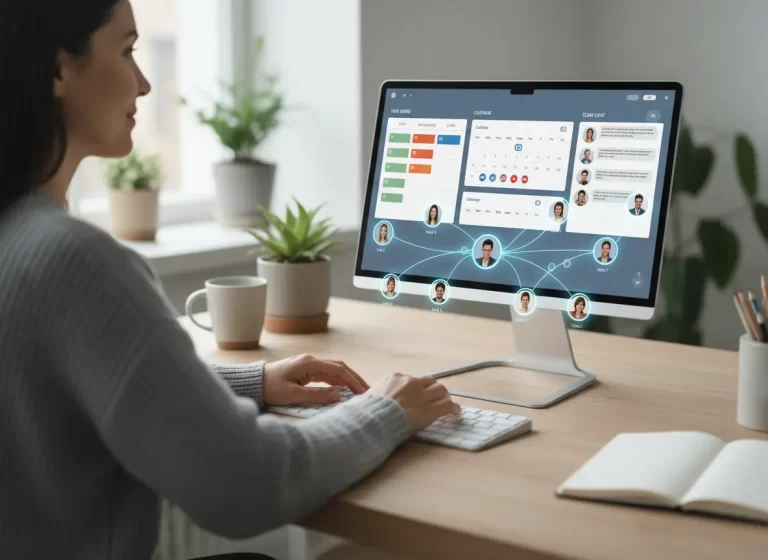
A work management system brings all your tasks, teams, and job-related info into one place. It gives everyone from the owner to the crew, a clear view of what needs to be done, who’s doing it, and when it’s due. A contractor work management system becomes stronger when it connects tasks, job schedules, customer records, field notes, and follow-up actions in one platform.
The result? Less confusion, fewer mistakes, and faster execution. A connected work management system gives contractors one place to manage job assignments, tasks, deadlines, and field updates.
How Work Management Systems Keep Teams Aligned
1. Clear Task Ownership
Each team member knows what they’re responsible for, and nothing gets forgotten or duplicated.
2. Real-Time Updates for Everyone
If plans change, updates are reflected instantly, so everyone is on the same page without needing another call or text.
3. Better Team Communication
Your team can collaborate inside the platform, with job details, photos, and notes stored in one location.
4. Stronger Team Accountability
When tasks are clearly assigned and deadlines are visible, it’s easier to follow through and get things done.
5. Connected Scheduling and Task Planning
A live calendar system helps teams connect scheduled jobs with assigned tasks, crew availability, and changing priorities.
A live calendar system helps teams connect scheduled jobs with assigned tasks and crew availability.
CRM Visibility for Smarter Workflows
While the focus is on internal task management, many businesses also benefit from linking their CRM to their work management tool. This lets your team see client history, notes, and job context helping them deliver better service without needing to dig for information.
Connecting your CRM with work management gives employees access to customer history, job context, notes, and follow-up details while work is being completed. This reduces searching and helps teams respond with better information.
Connecting CRM software with work management gives employees access to customer history, job context, notes, and follow-up details while work is being completed.
Move From Chaos to Clarity
If your team is dealing with missed tasks, unclear priorities, or constant back-and-forth just to stay on track, it’s time to shift from chaos to clarity.
At MyBusinessPortal.cloud, our work management system is designed to bring structure to your daily operations. From job assignments and real-time updates to calendar views and CRM visibility, MBP helps keep your team focused and your projects moving.
How MBP Helps Teams Stay Aligned
MBP helps teams stay aligned by bringing job activity, scheduling, work orders, customer details, and team updates into one system.
With MBP, your team gets better visibility into:
- Active jobs
- Assigned tasks
- Work orders
- Job status
- Schedules
- Customer information
- Team updates
- Handoffs
- Progress tracking
This helps managers reduce confusion, improve accountability, and keep jobs moving.
For growing teams, connecting HR software with work management helps managers organize employee information, responsibilities, and workforce planning.
Give Every Team Member Clear Job Visibility
MBP helps contractors connect tasks, schedules, customer records, work orders, and job updates so office staff and field crews can work from the same information.
Explore Work ManagementFrequently Asked Questions
What is a work management system?
A work management system is software that helps teams organize tasks, jobs, schedules, updates, responsibilities, and progress in one place.
How does a work management system keep teams aligned?
A work management system keeps teams aligned by giving everyone access to the same job details, task updates, schedules, and responsibilities.
Why do teams fall out of sync?
Teams fall out of sync when information is scattered across calls, texts, spreadsheets, paper notes, and separate tools. This creates confusion and missed updates.
What problems does work management software solve?
Work management software helps solve missed tasks, unclear ownership, poor handoffs, scattered communication, delayed updates, and weak job visibility.
When should a business use a work management system?
A business should use a work management system when teams manage multiple jobs, schedules, crews, customers, and updates across different tools or manual processes.
How does work management software improve contractor communication?
Work management software improves contractor communication by keeping job updates, tasks, schedules, and team information in one shared system instead of scattered messages and separate tools.
Why is job visibility important for contractors?
Job visibility is important because it helps managers understand project progress, identify delays, balance workloads, and keep teams aligned.
Can work management systems reduce missed tasks?
Yes. Work management systems reduce missed tasks by assigning ownership, tracking deadlines, and keeping updates visible to everyone involved.
What features should contractor work management software include?
Contractor work management software should include task management, scheduling, job tracking, communication tools, customer records, work orders, and progress visibility.