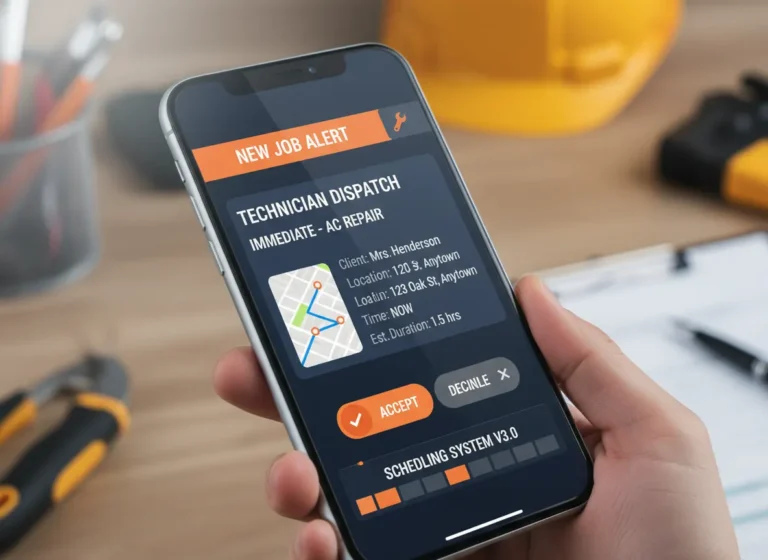


Scheduling affects more than who works where and when. It affects how your team feels, how well they perform, and how long they stay motivated.
When schedules are unclear, unfair, or constantly changing, employees feel stressed. They start missing details. They get tired faster. They lose trust in the system. Over time, poor scheduling turns into low morale, burnout, and higher turnover.
Smart scheduling helps solve this problem by giving teams better visibility, fairer workloads, and more predictable workdays. It helps managers plan jobs with less guesswork and helps employees know what to expect.
For contractors and service teams, burnout often starts when schedules change too often, crews are overbooked, recovery time is ignored, or managers cannot see who is carrying the heaviest workload. Smart scheduling software helps reduce these problems by connecting availability, job assignments, workload balance, and schedule updates in one place.
Quick Answer
How does smart scheduling boost team morale and reduce burnout?
Smart scheduling boosts team morale by creating fairer schedules, improving transparency, balancing workloads, and giving employees more predictable workdays. It reduces burnout by helping managers avoid overbooking, track workload, protect recovery time, and identify fatigue risks before they affect performance.
For contractors and service teams, smart scheduling software connects availability, job assignments, workload balance, and schedule updates in one system so teams can work more efficiently.
Why Scheduling Has a Direct Impact on Team Morale
Your team does not only care about the number of hours they work. They care about how those hours are planned.
A packed schedule with no breathing room creates pressure. A schedule that changes without notice creates frustration. A schedule that gives one person too much work while another has a lighter load creates resentment.
For teams that need better visibility into schedules, MBP’s Calendar helps managers organize assignments, availability, and schedule changes in one place.
Smart scheduling helps create balance.
It gives managers a clear view of employee availability, assigned jobs, workload, time off, and upcoming commitments. This makes it easier to build schedules that support both business needs and employee well-being.
Scheduling Problems That Hurt Morale and How Software Helps
| Scheduling Problem | How It Affects the Team | Smart Scheduling Fix |
|---|---|---|
| Last-minute schedule changes | Creates stress and confusion | Sends real-time updates to employees |
| Uneven workload distribution | Causes resentment and burnout | Shows who is overloaded or available |
| Missed time-off requests | Makes employees feel ignored | Tracks availability and approved time off |
| Back-to-back heavy jobs | Reduces focus and recovery | Helps managers protect rest periods |
| Poor schedule visibility | Leads to repeated questions | Gives teams one shared schedule |
| Manual scheduling mistakes | Creates delays and frustration | Reduces double booking and missed updates |
How Contractors Can Build Healthier Scheduling Workflows
Contractor teams often experience burnout when scheduling depends on manual updates, memory, or disconnected tools. A better workflow helps managers balance business needs while protecting employee workload.
| Scheduling Area | Better Workflow |
|---|---|
| Crew availability | Track employee availability before assigning jobs |
| Workload balance | Review assignments before employees become overloaded |
| Schedule changes | Send updates instantly to affected employees |
| Time-off requests | Manage requests in one organized system |
| Recovery time | Avoid excessive back-to-back assignments |
How It Boosts Team Morale
Smart scheduling improves morale because it removes many of the daily frustrations employees face.
When schedules are clear, employees know where they need to be, what they need to do, and how their day is expected to flow. They spend less time asking questions and more time doing productive work.
Smart scheduling helps morale by improving:
- Fairness
- Transparency
- Communication
- Workload balance
- Schedule predictability
- Employee trust
- Team accountability
When employees feel that scheduling is organized and fair, they are more likely to stay engaged.
Fairness and Transparency
Fairness matters in every workplace.
If employees feel that some team members always get the hardest shifts, longest routes, or most stressful jobs, morale drops quickly. Even if the schedule was not meant to be unfair, the lack of visibility creates doubt.
Smart scheduling improves fairness and transparency by showing:
- Who is assigned to each job
- Who is available
- Who is overloaded
- Who has time off
- Who handled similar work recently
- Which jobs need specific skills
- Where scheduling gaps exist
This helps managers make better decisions and explain those decisions clearly.
Transparency also helps employees trust the process. They know schedules are based on availability, workload, skills, and job needs instead of favoritism or guesswork.
Control and Flexibility
Employees feel less stressed when they have some control over their work schedule.
This does not mean every employee gets every preferred shift. It means the scheduling process gives room for availability, time-off requests, shift swaps, and workload adjustments when needed.
Smart scheduling supports control and flexibility by helping managers track:
- Employee availability
- Requested time off
- Preferred work hours
- Skill-based assignments
- Crew capacity
- Schedule conflicts
- Last-minute changes
For employee availability, time-off requests, and people-related scheduling needs, MBP’s HR tools help keep workforce details easier to manage.
When employees feel heard, they feel respected. That alone improves morale.
Flexibility also helps teams respond to real-life changes without creating chaos. If someone calls out or a job moves, managers can adjust the schedule faster and keep everyone informed.
Predictability
Unpredictable schedules create stress.
Employees need to plan childcare, family time, errands, rest, transportation, and personal commitments. When schedules change constantly, employees feel like their personal life is always on hold.
Smart scheduling improves predictability by giving teams advance visibility into work assignments.
Employees can see:
- Upcoming jobs
- Shift times
- Job locations
- Assigned crews
- Required tasks
- Schedule changes
- Time-off approvals
Predictability helps employees feel prepared. It also reduces anxiety because they are not waiting for last-minute updates every day.
How It Reduces Burnout
Burnout often builds slowly. It starts with long hours, constant changes, unclear expectations, and not enough recovery time.
Smart scheduling helps reduce burnout by giving managers the data they need to plan healthier workloads.
Instead of waiting until employees are already exhausted, managers can spot early warning signs.
These may include:
- Too many back-to-back shifts
- Too many urgent jobs
- Repeated overtime
- Uneven workload distribution
- Missed breaks
- No recovery time
- High-stress assignments grouped together
A smarter schedule helps reduce pressure before it turns into burnout.
Signs Your Scheduling Process Is Burning Out the Team
Your team may not always say they are burned out right away. Most of the time, the signs show up through missed details, slower work, frustration, or declining trust in the schedule.
Watch for these warning signs:
- Employees are repeatedly assigned too many urgent jobs
- The same people always handle the hardest schedules
- Crews receive job updates too late
- Managers rely on memory to balance workloads
- Time-off requests are missed or hard to track
- Employees complain about unpredictable schedules
- Overtime keeps increasing without a clear reason
- Job quality drops because the team is tired
When these problems happen often, the issue is not only workload. It is also the scheduling system behind the workload.
Mandatory Recovery Time
Employees need time to recover after long shifts, heavy workloads, or stressful jobs.
Without recovery time, performance drops. Mistakes increase. Employees become less patient, less focused, and less motivated.
Smart scheduling helps managers protect mandatory recovery time by preventing back-to-back overload.
For example, the system can help managers avoid assigning the same employee to:
- Too many long days in a row
- Consecutive high-stress jobs
- Late shifts followed by early shifts
- Heavy labor without enough rest
- Repeated overtime without breaks
Recovery time is not wasted time. It protects performance, safety, and long-term productivity.
Fatigue Tracking
Fatigue is not always obvious until it causes problems.
An employee may still show up on time, but they may be mentally drained, physically tired, or less focused than usual. If managers only look at attendance, they miss the bigger picture.
Smart scheduling helps with fatigue tracking by showing workload patterns over time.
Managers can review:
- Total hours worked
- Overtime frequency
- Number of jobs assigned
- Travel time between jobs
- Consecutive workdays
- Type of work assigned
- Employee availability
- Missed rest periods
This makes it easier to catch fatigue before it affects job quality, safety, or customer service.
Workload Optimization
Workload optimization means assigning work in a way that keeps the business moving without overwhelming the team.
This is where smart scheduling becomes more than a calendar. It helps managers balance workload based on availability, skills, location, job priority, and capacity.
When scheduling is connected with Work Management software , managers can see tasks, deadlines, job progress, and team workload together to prevent scheduling problems.
A better schedule helps prevent:
- Overbooking
- Understaffing
- Uneven assignments
- Crew confusion
- Missed deadlines
- Last-minute scrambling
- Employee overload
When the workload is balanced, employees perform better. Managers also spend less time putting out fires.
How Workload Visibility Prevents Employee Burnout
Managers cannot balance workloads effectively without knowing who is overloaded, who has availability, and where scheduling pressure is building.
A connected scheduling system helps managers monitor:
- Total assigned hours
- Overtime patterns
- Upcoming workload demands
- Employee availability
- High-pressure assignments
Better workload visibility allows managers to adjust schedules earlier and prevent burnout before productivity and employee satisfaction decline.
Build Better Schedules Without Burning Out Your Team
MBP Calendar helps contractors manage crew availability, job assignments, workload balance, and schedule updates from one connected platform.
Explore MBP CalendarReal-World Benefits
Smart scheduling creates practical benefits for both employees and managers.
For employees, it means:
- Clearer workdays
- Fairer assignments
- Fewer last-minute surprises
- Better rest periods
- Less confusion
- More trust in management
For managers, it means:
- Better visibility
- Faster schedule updates
- Fewer conflicts
- Better crew planning
- Lower burnout risk
- Stronger employee retention
For the business, it means:
- Better job completion
- Fewer scheduling errors
- Improved customer experience
- Higher productivity
- Lower turnover
- More reliable operations
A better schedule does not only make work easier. It helps the entire business run cleaner.
Why Manual Scheduling Makes Burnout Worse
Manual scheduling often depends on spreadsheets, whiteboards, phone calls, text messages, and memory.
That creates problems fast.
Managers may not see who is overloaded. Employees may not get updates on time. Time-off requests may get missed. Job changes may not reach the right people.
Manual scheduling makes it harder to track patterns. You might know someone is tired, but you may not see the full workload history causing it.
Smart scheduling gives teams one place to manage assignments, updates, availability, and workload.
That visibility helps prevent burnout before it becomes a bigger problem.
Taking the Next Step
If your team is dealing with constant schedule changes, missed updates, uneven workloads, or employee fatigue, the scheduling process needs attention.
Start by reviewing:
- Who gets the most overtime
- Which employees handle the most urgent jobs
- How often schedules change
- How much notice employees receive
- Whether time-off requests are tracked clearly
- Whether managers see workload balance
- Whether employees have enough recovery time
From there, move toward a scheduling system that gives your team better visibility and control.
Final Thoughts
Smart scheduling improves more than daily planning. It helps create a healthier workplace.
When employees see fair schedules, clear assignments, predictable workdays, and protected recovery time, morale improves. When managers track workload, fatigue, availability, and schedule conflicts, burnout becomes easier to prevent.
With MBP, your team can connect scheduling with calendar management, CRM, work orders, dispatch, HR, inventory, estimates, and invoicing. That gives your business one system for managing people, jobs, customers, and daily operations.
Better scheduling leads to better morale, lower burnout, and a stronger team.
Contractors that want to reduce scheduling stress and improve team visibility can contact MBP or schedule a demo.
Connecting scheduling with CRM software also helps teams keep customer information, job history, and service communication aligned.
Related Scheduling Resources
- Contractor Scheduling Software Features You’re Not Using But Should Be
- Is Manual Scheduling Creating Gaps in Your Workflow?
- Real-Time Scheduling Software Without Calls or Chats
- The Cost of Double Booking Crews in Contractor Scheduling
Smart Scheduling and Burnout FAQs
How does smart scheduling reduce employee burnout?
Smart scheduling reduces employee burnout by helping managers balance workloads, avoid repeated overtime, protect recovery time, and prevent last-minute schedule confusion. It gives teams more visibility and helps employees prepare for their workdays.
Why does poor scheduling hurt team morale?
Poor scheduling hurts team morale because employees may feel overloaded, ignored, or treated unfairly. When schedules are unclear or constantly changing, trust drops and frustration increases.
What scheduling problems cause burnout?
Scheduling problems that cause burnout include uneven workloads, back-to-back difficult jobs, frequent overtime, missed breaks, unpredictable schedules, and poor communication about changes.
How can managers create fairer schedules?
Managers can create fairer schedules by tracking availability, workload, time-off requests, job difficulty, travel time, and employee capacity before assigning work.
When should a business upgrade from manual scheduling?
A business should upgrade from manual scheduling when managers struggle with missed updates, overbooking, overtime, workload imbalance, or employee complaints about schedule confusion.
How does scheduling software improve employee workload balance?
Scheduling software improves employee workload balance by showing availability, assigned work, overtime patterns, and upcoming commitments. Managers can distribute work more fairly and prevent employees from becoming overloaded.
Can smart scheduling reduce overtime?
Yes. Smart scheduling can reduce overtime by helping managers identify workload issues early, balance assignments, and avoid unnecessary schedule conflicts.
Why is schedule visibility important for employees?
Schedule visibility is important because employees can prepare for upcoming jobs, manage personal commitments, and understand expectations without waiting for last-minute updates.
How do contractors prevent burnout caused by scheduling problems?
Contractors can prevent burnout by tracking workload, protecting recovery time, managing availability, reducing unnecessary overtime, and using scheduling systems that provide real-time visibility.