The traditional 9-to-5 office model is fading, and the remote work revolution is here to stay. While this shift offers incredible freedom and flexibility, many leaders struggle with the complexities of remote team management. Without the right structure, communication breakdowns and missed deadlines can plague even the most talented distributed teams. Enter MyBusinessPortal.Cloud (MBP). We provide the digital infrastructure needed to turn virtual chaos into clarity. In this post, you will discover actionable strategies to maintain high remote productivity, foster seamless online collaboration, and utilize the best digital tools to lead your team effectively, no matter where they are located in the world.
Quick Answer
How do businesses manage remote teams effectively?
Businesses manage remote teams effectively by using centralized digital systems that organize communication, task tracking, scheduling, and performance visibility in one place. Clear workflows, documented updates, and shared accountability help distributed teams stay aligned across different locations and time zones. Remote management tools improve productivity by reducing confusion, delays, and communication gaps.
What is remote team management?
Remote team management is the practice of leading and coordinating employees who work from different locations using centralized digital systems, documented workflows, and outcome-based performance tracking. Instead of relying on physical supervision, managers use shared tools to assign tasks, track progress, communicate updates, and maintain accountability. Effective remote team management focuses on clarity, visibility, and structure so teams can operate independently while staying aligned with business goals.
How to Manage Remote Teams Across Multiple Time Zones
Remote teams often work across different time zones, cities, or even countries. Without structured coordination, geographic separation creates delays, missed handoffs, and communication gaps that slow productivity.
Effective remote team management accounts for location differences by:
- aligning deadlines across time zones
- scheduling handoffs between regions
- documenting updates so work continues while others are offline
- maintaining clear working hour visibility
- ensuring tasks move forward without waiting for real-time responses
When workflows are designed around geographic distribution, remote teams stay productive no matter where people work.
Build a Centralized System for Remote Team Management
Transitioning to virtual work requires more than just a laptop and a video conferencing app; it requires a mindset shift and a robust digital ecosystem. A functional virtual office isn’t a physical place, but a collection of integrated workflows and platforms that allow work to happen asynchronously. At MBP, we believe the core of successful management lies in centralization.
When documents, tasks, and communication channels are scattered across a dozen different applications, employees lose time searching for information, and managers lose visibility. By consolidating your operations into a unified cloud portal, you create a “single source of truth.” This structure empowers your team to work autonomously without constant micromanagement, ensuring that everyone knows exactly what needs to be done, regardless of their time zone.
Why Remote Teams Improve Business Flexibility and Growth
Embracing a remote-first culture is no longer just a necessity for many businesses; it is a strategic advantage that drives growth. When you optimize your management style for distributed teams, you unlock several key benefits that physical offices simply cannot match:
Hire Skilled Employees Beyond Your Local Area
You are no longer limited by geography or commute times. You can hire the best skills for the job, not just the best candidates in your postal code.
Improve Productivity With Flexible Remote Work
Without the distractions of a bustling physical office and the energy drain of commuting, employees often focus better and deliver higher quality work in shorter timeframes.
Reduce Overhead Costs With Remote Operations
A virtual office significantly reduces overhead costs associated with physical leases and utilities, allowing you to reinvest those funds into better digital tools and employee development.
Best Tools for Remote Team Collaboration and Productivity
How do you ensure everyone stays on the same page when you can’t walk over to their desk? The answer lies in robust online collaboration protocols supported by the right technology. At MyBusinessPortal.Cloud, we streamline this process by offering a suite of digital tools designed specifically for transparency and accountability.
Our platform allows you to assign tasks, track progress in real-time, and securely store vital company assets. Instead of drowning in endless email chains or lost chat messages, your team can collaborate directly within specific project modules. This reduces friction and ensures that managers have clear oversight without needing to “hover” virtually. With MBP, the focus shifts from hours logged to actual results, helping you establish clear KPIs and deliverables that drive your business forward.
Manage Remote Teams More Efficiently With MBP
Mastering remote team management is the cornerstone of modern business success. When you combine the flexibility of virtual work with the structure of centralized digital tools, your team can perform at its best no matter where they are. It’s about creating alignment, accountability, and momentum across every location.
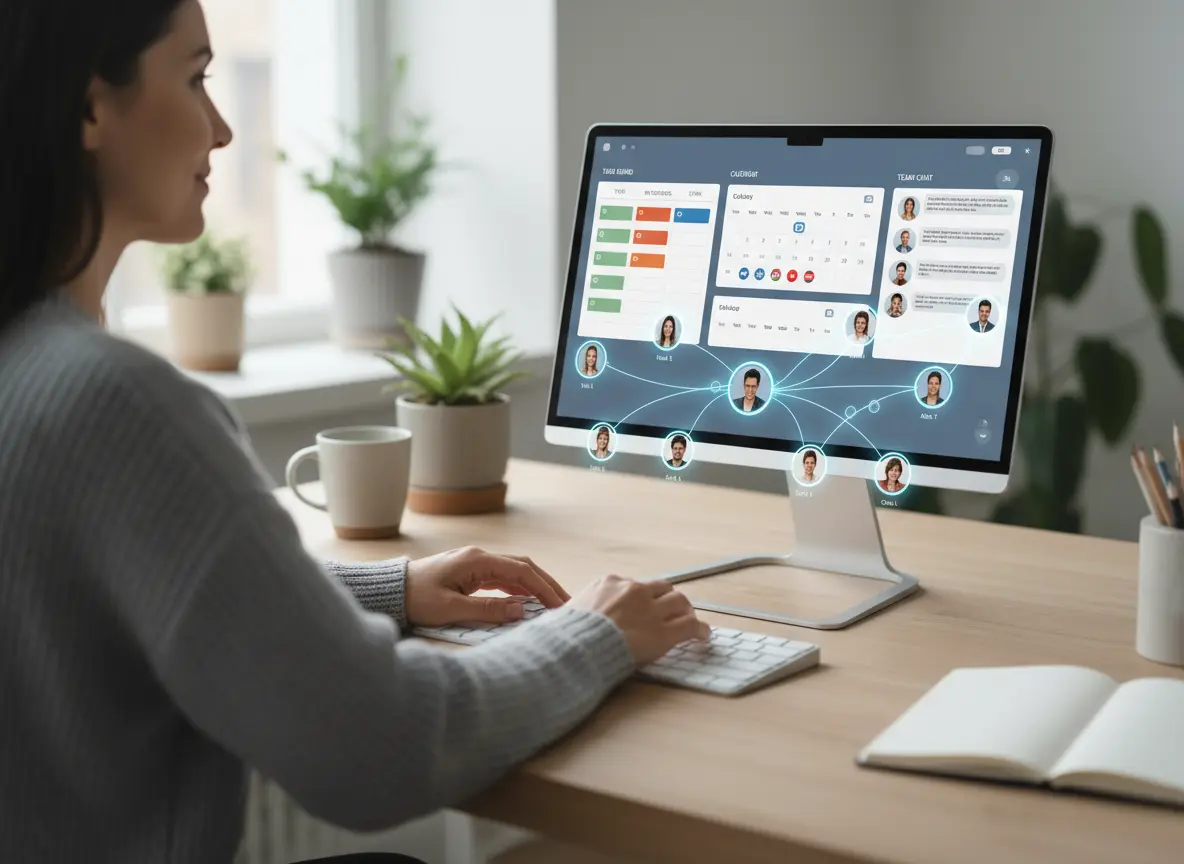
MyBusinessPortal.Cloud unites Work Management, Calendar, HR, and CRM into one connected platform, giving you full visibility and control over your remote operations. Manage projects, track performance, and keep communication effortless, all from a single dashboard.
Don’t let distance limit your growth. Empower your distributed team with MBP and unlock the true potential of a borderless, high-performing business.
Frequently Asked Questions
What is remote team management?
Remote team management is the process of organizing, leading, and coordinating employees who work from different locations using centralized digital systems and structured workflows. Managers rely on shared tools for communication, task tracking, scheduling, and accountability instead of physical supervision. The goal is to keep teams aligned, productive, and connected regardless of location.
Why do remote teams struggle without structured systems?
Remote teams struggle when communication, files, tasks, and updates are scattered across different apps and channels. Without centralized systems, employees waste time searching for information, deadlines get missed, and accountability becomes unclear. Structure creates visibility and helps distributed teams stay coordinated.
How do businesses manage remote teams effectively?
Businesses manage remote teams effectively by using centralized platforms that combine communication, task management, scheduling, and progress tracking in one place. Clear workflows, documented updates, and shared accountability reduce confusion and improve productivity across time zones. Strong systems replace the need for constant micromanagement.
Why is centralized communication important for remote teams?
Centralized communication prevents important updates, tasks, and files from getting buried across multiple tools or conversations. When teams work from one shared system, everyone has access to the same information and project visibility improves. This reduces delays and improves collaboration across distributed teams.